← Back to The HUT

March 1980 · Volume/issue not printed or unknown

March 1980 Magazine

Issue first-page cover

Magazine · 12 pages

March 1980 Magazine

Captured text — scan page 7

Automatically captured text may contain recognition errors. Compare it with the original scan.

This shows the complete scan page, including any other material on it.

DESIGN CONCEPT INFLUENCES
MINNESOTA VALLEY STATE TRAIL CONSTRUCTION

Design. is the key element in any trail.
Design, therefore, is a tremendous chal-
lenge to members of the planning team for
the Minnesota Valley State Trail. The
trail has exceptional potential. It's
scenic beauty could be impressive with the
striking variety of natural and historical
features in the area.

The Minnesota Valley Trail will extend more
than 70 miles, from Fort Snelling to LeSueur,
as authorized by state law.

Part of the trail will be built along
abandoned railroads; the*remainder will
wind through the valley, slipping in and
out of view of the river that, in earlier
days, served Indians, voyageurs, and
settlers.

The incredible variety that exists
includes: bluffs, the river, the flood-~
plain marshes, gently-rolling hills,
clear streams and wilderness lakes, woods
carpeted with green nettles, oak-dotted
prairies, plus picturesque historical
buildings and farms.

MASTER PLAN STUDIES OF MISSISSIPPI RIVER

emer

$350 million in master plan studies of the
Upper Mississippi River System (UMRS) are now
underway. The studies include research and
‘analysis of management, navigation/transport-
ation, environmental, dredged material dispo-
sal, computer system feasibility, and public
participation/information activities.

The research represents cooperative efforts
among state governments, federal agencies,
local governments, universities, businesses,
special interest groups and citizens.

The Master Plan purpose is to identify econ-
omic, recreational and environmental objec-
tives for the UMRS, as well as identifying
any authorities needed to meet those objec-
tives.

Several research projects by the Environ-

mental Studies Sub-Work Team have already

begun. These studies include a summary
resource description of the UMRS; identifi-
tion of ways to prevent or reduce damages

/ to. fish and.wildlife resources which may be

related to navigation of the UMRS; and
determination of the effects commercial and
recreational navigation have on fish and
wildlife, wilderness, water quality and
recreation opportunities.

?

OUTDOORS NOT CLOSED FOR THE PHYSICALLY
HANDICAPPED

People with physical handicapped who enjoy
the outdoors will find that the DNR has
taken several measures to make it possible.

In 1977, the Department received more than
$500,000 in federal funds to create or ©
remodel facilities at 40 state parks to
provide accessibility for all persons.

Sanitation buildings, picnic tables, nature
trails and parking areas are examples of
facilities that were modified or built to
permit their use by those with physical
handicapps.

A.trail was built suitable for use by those
in wheel chairs, the blind, and other
physically handicapped persons. Braille
was used to identify the various natural
phenomena along the trail.

In addition, there are various state laws
aimed at making it easier for the physically
handicapped to enjoy hunting.

Local conservation officers can issue
special permits to shoot or hunt from a
standing vehicle to licensed hunters who
are physically unable to walk.

LUCE LINE

CORRIDOR TRAIL

KANDIYOHI MEEKER N
CO. oO

i CARVER
McCLOUD CO.

LUCE LINE
CORRIDOR TRAIL

Articles (14) · Summaries (14)

Generated issue overview: A Minnesota Canoe Association HUT newsletter issue containing canoeing and outdoor-recreation articles, association news, and organizational material. The OCR includes a reference to the March 1980 issue and a spring 1980 trip, but the issue date is not reliably legible.

Generated summaries are descriptions, not original captured text. Page-range text shows complete scan pages and may include neighboring material.

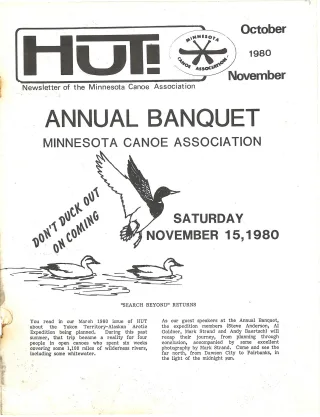
“Search Beyond” Returns

Title transcribed from original publication

Generated summary: A preview of the Yukon Territory–Alaskan Arctic expedition, in which four people traveled about 1,100 miles of wilderness rivers over six weeks. The expedition members are scheduled to recount the journey at the association banquet, with photography by Mark Strand.

Open scan page 1

Read captured page 1 →

Editor's Note

Title transcribed from original publication

Generated summary: The editor introduces a new newsletter format and co-editor Michelle Jerry, and invites readers to offer comments and suggestions and participate in the publication.

Open scan page 2

Read captured page 2 →

Boundary Waters Canoe Area: It’s Political Survival

Title transcribed from original publication

Generated summary: The concluding installment in a series about the BWCA dispute. It recounts debates over wilderness protection, logging, motorized recreation, legislation, and litigation, including a federal court ruling and plans to appeal.

Open scan page 3

Read captured pages 3–4 →

Just Paddling

Title transcribed from original publication

Generated summary: An invitation for association members to submit accounts of canoe-related outings, races, and trips, along with observations about water conditions, access, cleanup, hazards, and people encountered.

Open scan page 4

Read captured page 4 →

10th Annual Spring Trip

Title transcribed from original publication

Generated summary: An account of the April 19, 1980, spring canoe trip on Rice Creek. Seven canoes traveled the creek, encountering wildlife, garbage, an obstruction, and a capsize before reaching Locke Park and stopping for lunch in Fridley.

Open scan page 5

Read captured page 5 →

The Biggest Tree

Title transcribed from original publication

Generated summary: A brief report identifies a jack pine outside Lake Bronson State Park as the nation's largest, citing its circumference and height and noting confirmation by the American Forestry Association.

Open scan page 5

Read captured page 5 →

North Star Ski Touring Club…Still on the Right Track

Title transcribed from original publication

Generated summary: An introduction to ski touring and the North Star Ski Club, describing its growth since 1967 and the recreational opportunities it offers. The visible text mentions a monthly newsletter with ski updates, personal experiences, techniques, and other items.

Open scan page 5

Read captured page 5 →

Protect Minnesota’s Cougars

Title transcribed from original publication

Generated summary: A short appeal concerning a reported cougar sighting near Wawina and the lack of clear state-level protection for cougars. The author urges readers to contact legislators about closing a perceived gap in wildlife protection.

Open scan page 6

Read captured page 6 →

“Average” Winter Predicted

Title transcribed from original publication

Generated summary: A brief forecast roundup reports differing expectations for the coming winter, including an average winter prediction based on historical data and a forecast of 60 inches of snow with slightly below-average temperatures.

Open scan page 6

Read captured page 6 →

Are Canoeists Inadvertently Reducing Loon Populations?

Title transcribed from original publication

Generated summary: The article explains how loons leaving nests as canoes approach may reveal nest locations to ravens or crows, exposing eggs and chicks to predation. It notes concerns about loon populations in heavily used areas of the Boundary Waters.

Open scan page 6

Read captured page 6 →

Loon Observation Program Initiated

Title transcribed from original publication

Generated summary: A notice says the DNR is seeking volunteers to submit loon observations to help provide data on the bird’s population. It identifies the program as being conducted by the agency’s non-game wildlife office.

Open scan page 6

Read captured page 6 →

Design Concept Influences Minnesota Valley State Trail Construction

Title transcribed from original publication

Generated summary: A report describes design considerations for the planned Minnesota Valley State Trail, which is authorized to extend more than 70 miles from Fort Snelling to Le Sueur. It highlights the route's varied natural and historical features and its use of abandoned railroads and valley terrain.

Open scan page 7

Read captured page 7 →

Master Plan Studies of Mississippi River

Title transcribed from original publication

Generated summary: A report on cooperative master-plan studies of the Upper Mississippi River System, covering management, navigation, environmental issues, dredged-material disposal, and public participation. The stated purpose is to identify economic, recreational, and environmental objectives and needed authorities.

Open scan page 7

Read captured page 7 →

Outdoors Not Closed for the Physically Handicapped

Title transcribed from original publication

Generated summary: A brief report describes DNR measures intended to improve outdoor access for people with physical disabilities, including accessible facilities at state parks, an adapted trail, and special hunting permits.

Open scan page 7

Read captured page 7 →

Directory & index sections (2)

1979–80 Board of Directors, Minnesota Canoe Association, Inc.

Generated summary: A roster listing association officers, committee roles, chapter contacts, names, addresses, and telephone numbers.

Read complete scan page 11 →

Sponsor Listings

Generated summary: A section introducing businesses and individuals supporting the MCA through listings, with example sponsor entries and information about advertising in HUT.

Read complete scan page 11 →