← Back to The HUT

August 1977 · Volume/issue not printed or unknown

August 1977 Magazine

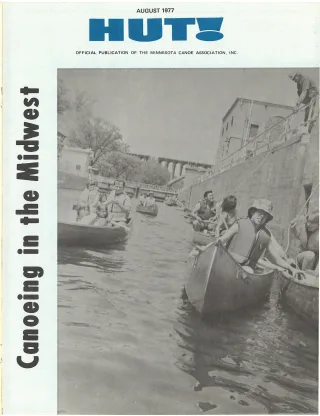
Issue first-page cover

Magazine · 12 pages

August 1977 Magazine

Captured text — scan page 6

Automatically captured text may contain recognition errors. Compare it with the original scan.

New Resin - Fiberglass Depots
By Chuck Alberg

The MCA now has four new resin depots. Because we
rely on volunteer workers and because the MCA is a
non-profit organization, it is imperative that members note
the following rules:

1. Supplies sold only to paid up regular members.
Bring your membership card with you.

2. Call the depot and schedule a time for picking up
supplies.

3. Materials must be paid for by check or money order
for the exact amount of purchase. Make checks payable to
the Minnesota Canoe Association.

SUPPLIES AND PRICES

Polyester resin with Catalyst _ $7.50 per gallon
4oz. cloth, 50 inches wide $1.60 per yard
7/2 oz. cloth, 50 inches wide $1:70 per yard
7/2 oz. cloth 60 inches wide $2.00 per yard

Simple Formula Determines Bow Seat Placement

by Karl N. Ketter

Undoubtedly, the biggest problem with the factory-produced canoe is the placement of the
front seat. It just does not belong in the middle of the canoe. Most canoes are designed and built
by boat builders whose preoccupation with stability under horsepower does not allow for the
lightness or maneuverability of the man-powered canoe.

Seats should be positioned as close as possible to the ends of the canoe. Generally, the bow seat
is placed first, then the rear seat is mounted so that both the bow and stern draw the same depth.
Some time ago in HUT!, Janice and Janet Robidoux mentioned the simple proportion that can be
used to position seats. The formula still holds firm as long as care is taken to keep the bowman as
close to the bow as his legs will allow. (Note: Measurements are to the front edge of the seat, as an
approximation of the center of mass of a paddler.) Here is the formula:

bowman’s weight _ sternman’s weight

distance from bow (unknown) distance from stern

or simply:

distance from stera, = sternman’s weight times the distance from the bow

bowman’s weight

A properly-set bow seat makes a draw stroke more effective and less ridiculous than one done
from the center of the canoe. And, obviously, every stroke becomes less painful as the gunnels are
moved out of the way.

}<— sow->| A lq STERN »|
CENTER

from bow HINT: Measure from front edge of from stern
both the bow and stern seats. Set
bow seat as close to bow as comfort-
able.

distance distance

Hut Page 5

Articles (6) · Summaries (6)

Generated issue overview: An August 1977 issue of HUT, the Minnesota Canoe Association magazine. The OCR includes canoe-building notices and event listings, canoeing articles and reports, membership and association information, advertisements, and classifieds.

Generated summaries are descriptions, not original captured text. Page-range text shows complete scan pages and may include neighboring material.

Trip Report: Vermillion River (Northeastern Minn.)

Title transcribed from original publication

Generated summary: Tom Aluni recounts a party's high-water trip on the Vermillion River, describing dangerous rapids and incidents involving paddlers John Wexler and Henry Kinucan.

Open scan page 4

Read captured page 4 →

New Resin - Fiberglass Depots

Title transcribed from original publication

Generated summary: Announces four MCA resin depots and explains member eligibility, pickup scheduling, payment requirements, and listed material prices.

Open scan page 6

Read captured page 6 →

Simple Formula Determines Bow Seat Placement

Title transcribed from original publication

Generated summary: Explains a weight-and-distance proportion for positioning a canoe's bow seat, with practical notes on seat measurements and paddling comfort.

Open scan page 6

Read captured page 6 →

Ely field hearings on Boundry Waters

Title transcribed from original publication

Generated summary: A lyrical description of the Boundary Waters region, emphasizing its lakes, streams, granite shores, clean water, and wildlife.

Open scan page 7

Read captured page 7 →

Royalex Review

Title transcribed from original publication

Generated summary: Compares Royalex Mad River Explorer and Old Town Tripper canoes, discussing their dimensions, weight, stability, speed, maneuverability, handling, and practical modifications. The review concludes with recommendations for different paddling uses.

Open scan page 8

Read captured pages 8–9 →

New Minnesota Rivers Book

Title transcribed from original publication

Generated summary: Reports on the Minnesota Department of Natural Resources guide A Gathering of Waters, describing its coverage of Minnesota rivers, photographs, maps, and price, and giving ordering information.

Open scan page 9

Read captured page 9 →