
Get Rolled!!
Title transcribed from original publication
Generated summary: Announcement and description of Cascaders pool sessions teaching the Eskimo roll, with information about the course, registration, cost, and contacts.
Open scan page 3December 1976 · Volume/issue not printed or unknown
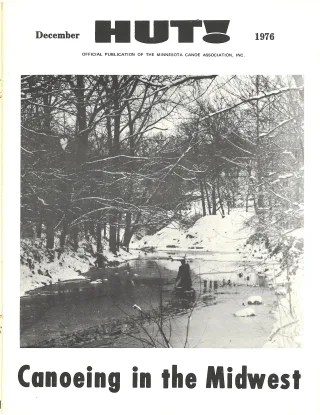
Magazine · 20 pages
December 1976 Magazine
For the full-resolution original, use Open PDF above. Your browser handles PDF zoom and navigation.
Generated issue overview: A December 1976 issue of HUT, the official publication of the Minnesota Canoe Association. The issue includes canoe-building and sailing information, poling, wilderness-travel writing, book reviews, club news, and a fictional whitewater legend, alongside calendars, forms, advertisements, and other member material.
Generated summaries are descriptions, not original captured text. Page-range text shows complete scan pages and may include neighboring material.
Title transcribed from original publication
Generated summary: Announcement and description of Cascaders pool sessions teaching the Eskimo roll, with information about the course, registration, cost, and contacts.
Open scan page 3Title transcribed from original publication
Generated summary: A brief chapter-news column reporting Cascaders’ participation and results at the Last Ditch Slalom, MCA banquet news, and humorous member updates.
Open scan page 3Title transcribed from original publication
Generated summary: Report on the annual canoe builders contest, describing the turnout, winning woodstrip canoe, other placements, and entries in the solo canoe and North Canoe classes.
Open scan page 4Title transcribed from original publication
Generated summary: Practical guidance on outfitting a canoe for sailing, including rig types, mast and rudder placement, leeboards, sailcloth, spars, and options for obtaining a small sail rig.
Open scan page 5Title transcribed from original publication
Generated summary: Explains the MCA board’s decision to end its current resin and fiberglass-cloth sales arrangement, citing volunteer workload, material consistency, safety, and liability, and discussing possible alternatives.
Open scan page 6Title transcribed from original publication
Generated summary: A wilderness canoe-travel narrative about wind and waves in the Quetico area, recounting difficult crossings and arguing for judgment over adherence to a travel schedule.
Open scan page 9Title transcribed from original publication
Generated summary: Describes canoe poling as a way to travel shallow streams and reach less-used waterways, including in winter, and discusses the development and advantages of lightweight aluminum poles. The article continues on the following page with competition and technique history.
Open scan page 10Title transcribed from original publication
Generated summary: Book review of John McPhee’s account of Henri Vaillancourt building birch-bark canoes and a canoe trip in the Maine wilderness. The reviewer reflects on canoe craftsmanship and recommends the book for its descriptions of the craft and wilderness.
Open scan page 12Title transcribed from original publication
Generated summary: Review of Robert Mead’s account of a 1,700-mile canoe journey toward the Arctic, praising its candid treatment of travel difficulties and recommending it to readers considering the Mackenzie River.
Open scan page 13Title transcribed from original publication
Generated summary: Review of a canoeing guide that covers equipment, handling a canoe, finding help, places to go, and appendixes; the reviewer notes its advice and comments on its treatment of canoe choice and canoe organizations.
Open scan page 13Title transcribed from original publication
Generated summary: Review of Sigurd F. Olson’s book of personal reflections, describing it as an intimate work of philosophy and belief and emphasizing the reviewer’s personal response to it.
Open scan page 13Title transcribed from original publication
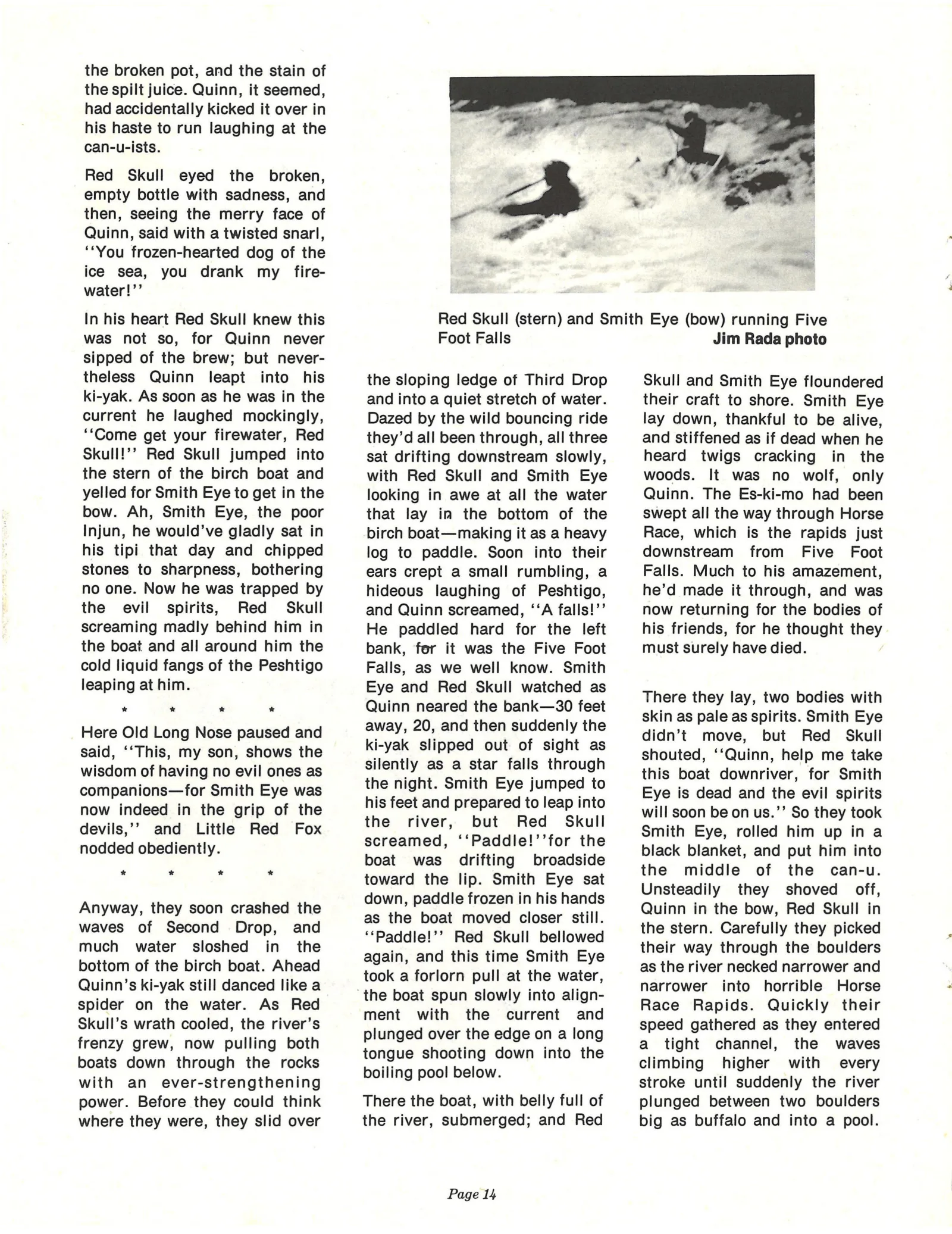
Generated summary: A comic fictional legend in which three Indigenous characters and a visitor run the Peshtigo River rapids; the story uses exaggerated misunderstandings to explain the characters’ later pale faces and the term “whitewater.”
Open scan page 14