
The Editor Says
Title transcribed from original publication
Generated summary: The editor describes the transition from a newsletter to a monthly HUT, outlines publication goals, and notes selected contents of the issue.
Open scan page 3July 1976 · Volume/issue not printed or unknown
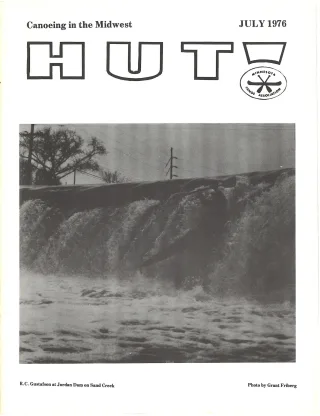
Magazine · 20 pages
July 1976 Magazine
Automatically captured text may contain recognition errors. Compare it with the original scan.
This shows the complete scan page, including any other material on it.
BWCA TRAVEL ZONES
Refer to Map on page 9
HEAVILY USED TRAVEL ZONES:
Travel Zone 3 Travel Zone 19
This zone is severly crowded during Memorial Day
weekend. Early June, late July, and the first three weeks
in August receive heavy use, with the remainder of the
season receiving moderate use. Lake One, Lake Two, the
Travel Zone 5 . north half of Lake Three, Lake Four, Hudson Lake, and
‘ r his is heavily used a both an secess route to the west end of Lake Insula receive heavy use throughout
adjoining areas and as a destination in itself. Moose River the season. Campsites are more likely available on bays or
provides little parking space and is generally crowded. lakes away from the main travel routes. Plan your route
carefully -- motors are not permitted on many of the lakes.
This is héavily used as an access route to adjoining
areas.
Travel Zone 8
This is a heavily used area, with a large proportion of
the use being day use. Camping use is heavy during the
weekends of the opening of fishing season, Memorial Day,
and Labor Day.
Travel Zones 11 and 12
Campsites will be difficult to find in both travel zones
during August and in travel zone 11 during the weekends
covering the opening of fishing season and Memorial Day.
The areas directly below Pipestone Falls and above
Basswood Falls are crowded throughout the summer, as is
Fall Lake. Zone 12 is less crowded in July. The primary
access points to the travel zones are Moose Lake and Fall
aa the two most highly used entrance points to the Travel Zane Be
This travel zone has the third highest campsite
occupancy rate of all travel zones. It is severely
overcrowded for the first three weeks of August. June,
July, and the last week of August receive heavy use with
occasional periods of moderate use. Campsites are more
crowded in the western end of the travel zone. Problems
with bears raiding food packs and campsites are common
throughout the summer. Use is generally light during May
and September.
Travel Zone 27
Travel zone 27 receives heavy use in early June and
from late July until late August. Ogishkemuncie is
severely overcrowded. Hanson and Ester Lakes are less
crowded on weekends. Lakes other than these three tend
Travel Zones 13 and 14 to be lightly used. Weekdays tend to receive heavier use
The primary access point for these travel zones is than weekends. Sea Gull Lake is the most heavily used
Moose Lake, the most heavily used entrance point to the access point to this travel zone, providing nearly half of the
BWCA. Nearly a quarter of all visitors to the BWCA enter groups.
here.
Travel Zone 28
The campsites in these zones have the highest Saganaga and Sea Gull Lakes receive heavy use from
occupancy rates of all travel zones. The main travel routes mid-May through Labor Day. Much of this is day use by
are severely crowded from late July through Labor Day. large motorboats. Many of the campsites along the main
Overcrowding occurs during-the weekends of the opening route are overused. Fishing pressure is heavy in the spring
of fishing season and Memorial Day. and early summer. Saganaga is severely overcrowded on
; the opening weekend of fishing season. Alpine Lake has
Ensign Lake, Vera Lake, and the west of Knife Lake moderate to heavy overnight camping during July and
are severely crowded from Memorial Day weekend to August. There is considerable through-travel between Sea
Labor Day. If it is necessary to camp in travel zone 14, a Gull and lakes to the southwest.
better chance of finding unoccupied campsites exists on
weekends and in bays off the main travel route.
Problems with bears raiding food packs and campsites
are common throughout the summer.
Camping is limited to one night on the Moose Lake
chain of lakes.
Page?
Generated issue overview: July 1976 issue of HUT, identified on the cover as “Canoeing in the Midwest.” The issue includes canoeing instruction, trip and event information, race coverage, BWCA travel-zone guidance, and club news. It also contains advertisements, membership material, listings, forms, and a board roster.
Generated summaries are descriptions, not original captured text. Page-range text shows complete scan pages and may include neighboring material.
Title transcribed from original publication
Generated summary: The editor describes the transition from a newsletter to a monthly HUT, outlines publication goals, and notes selected contents of the issue.
Open scan page 3Title transcribed from original publication
Generated summary: The association announces its first office since its formation in 1961, gives its location and explains that members are needed to help furnish and operate it.
Open scan page 4Title transcribed from original publication
Generated summary: An announcement describes a July 17 family canoe trip from Monticello to Elk River, including the meeting place and trip leader contact information.
Open scan page 4Title transcribed from original publication
Generated summary: A trip announcement describes a two-day Namekagon River outing, with camping, shuttle, meeting, and route directions.
Open scan page 4Title transcribed from original publication
Generated summary: An announcement invites paddlers to a July 18 cruise from the University of Minnesota River Flats to Pike Island, followed by Rendezvous activities and shuttle instructions.
Open scan page 4Title transcribed from original publication
Generated summary: A race report describes low-water conditions and competitors in the Jensen Handicap, gives race times and pairings, and recounts a subsequent Challenge Race.
Open scan page 5Title transcribed from original publication
Generated summary: A notice describes basic and efficient canoeing classes, the skills covered, locations, dates, class sizes, fees, and registration contacts.
Open scan page 5Title transcribed from original publication
Generated summary: A course notice outlines an introductory open-canoe whitewater session covering river safety, strokes, water reading, and boat control, with equipment and registration details.
Open scan page 5Title transcribed from original publication
Generated summary: A humorous account previews the Brigade du Canots du Nord’s planned appearance at the Fort Snelling Rendezvous and lists playful activities for the event.
Open scan page 6Title transcribed from original publication
Generated summary: A notice promotes a singles paddling class led by Joe Conrad, with prerequisites, dates, location, fee, and registration details.
Open scan page 6Title transcribed from original publication
Generated summary: A tongue-in-cheek notice announces a Cascaders canoe race at Lake Johanna and gives eligibility and reservation details.
Open scan page 6Title transcribed from original publication
Generated summary: A race report describes low water, wind, course conditions, and results from the Faribault race, including winners in several boat classes.
Open scan page 7Title transcribed from original publication
Generated summary: The author recounts humorous suggestions for naming a newly built voyageur canoe and settles on “Flotsam.”
Open scan page 8Title transcribed from original publication
Generated summary: A practical camp-cooking article explains stir-frying in a wok and gives a flexible meat-and-vegetable recipe and cookware advice.
Open scan page 8Title transcribed from original publication
Generated summary: A multi-page guide describes use levels, crowded periods, access points, camping conditions, and travel considerations in Boundary Waters Canoe Area travel zones. A map accompanies the material.
Open scan page 9Title transcribed from original publication
Generated summary: A detailed event announcement gives the slalom’s dates, venue, classes, fees, registration procedures, schedule, camping information, and meal plans. The following page contains its entry form.
Open scan page 13Title transcribed from original publication
Generated summary: An announcement invites members to enter or judge canoes in five classes at an August meeting and describes canoe try-outs and judging criteria.
Open scan page 15Title transcribed from original publication
Generated summary: An instructional article explains how leaning a canoe to the offside can help the stern swing through turns and improve control in twisting streams and sidewinds.
Open scan page 15Title transcribed from original publication
Generated summary: A satirical story imagines absurd regulations and enforcement for paddlers on a river, presented as a mock police incident log.
Open scan page 16Title transcribed from original publication
Generated summary: A remembrance describes Neil Christian as an engineer, performer, singer, and skilled canoe builder, and recalls his music and humor.
Open scan page 17Generated summary: A board and chapter-officer roster lists positions, names, telephone numbers, and addresses.