← Back to The HUT

April 1974 · No. 7

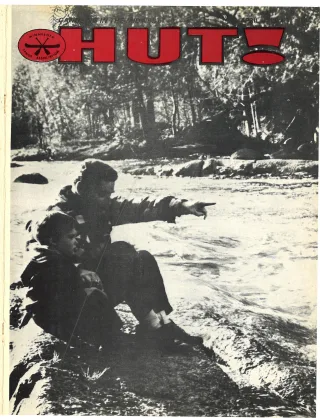
April 1974 Magazine (No. 7)

Issue first-page cover

Magazine · 36 pages

April 1974 Magazine (No. 7)

Captured text — scan page 5

Automatically captured text may contain recognition errors. Compare it with the original scan.

permit a view of geese not seen in the
United States except in winter. Whether ae
the Hutchin’s and the Snows and Blues ce
will nest in the city at this low latitude is ia
highly conjectual. In the event these birds “wh
do not appear to adapt well, they will be
allowed to leave in mid-summer. 7 ; 4 a ee
The Birds L : ane
Giant Canada Geese used to be abun-
dant in the mid-West, nesting throughout
Minnesota and the Dakotas. They differ
principally from other species of Canada
Geese by size and markings. Some adult
males will weigh over 20 pounds, and all
members of the species have a very light
grey, almost white chest. Like other spe-
cies of Canadas, giants have a black tail,
neck, and head with a distinctive white
cheek patch. The rest of the bird is princi-
pally a dark grey color although a white
margin both below and above the tail gives
an appearance of a white “V” when the
bird is seen flying. A flock of giant Cana-
das is quite easily recognizable since many
of its members will show one or two spots
of white on their foreheads and a slight ,
hook may be seen at the top margin of the Loafing on the beach — ooo,
white cheek patches. Many have awhite killed in fighting very large, free-running hand and is vicious in its defense. Through-
ring separating the black neck from the dogs when their goslings were about a out May, June and July, the family units
breast. Giant Canadas are truely magnif- month old. The goslings all were adopted usually may be seen on one of the shores
icent birds whether swimming or flying. immediately by another pair. Observation of Lake of the Isles or along the banks

Any view is long remembered. of a nest and goose from a canoe isboth of the lagoon between Lake of the Isles
Few giant Canadas nest before their adequate and safe at twenty feet yet itis and Cedar Lake.

fourth spring, although many younger not so close that it will bother the goose Giant Canada geese are very family

birds will pair and defend territory in their and jeopardize the nest. and class oriented. A pair of mated adults

third spring. Pairing usually occurs in After hatching, the hen is joined bythe and its goslings will maintain family

February when the birds are on their win- gander and the family heads for water as integrity until the following February
tering grounds, and a pair remains monog- _ soon as the goslings are dry. The goslings when the adult pair again readies for nest-
amous for life unless the pair is broken by are covered with yellow fluff and are ing and drives off the last brood. Each
death or forced separation. In such in- about the size of a sparrow. They grow family, particularly the gander, exhibits
stances, the remaining birds will mate rapidly and by the tenth week begin tes- hostility towards other geese and warns
again. ting their wings. In a couple of weeks they others when they come too near by low-

Giant Canadas nest in late March or change to a dull grey, as feathers begin to’ ering his head to water level and swimming
early April with the older experienced show and develop the color patterns of at the intruder. When an interloper occa-
birds nesting two weeks ahead of birds the adults by the seventh week. The sionally fails to note the gander, he will
nesting for the first time. They lay from gander leads the family when danger is at inevitably be bitten, then honk loudly
three to seven eggs about a day and one- : ss
half apart. New pairs will usually lay only
an egg or two the first year and often
experience infertility. Nests are shallow
depressions lined with goose down. A nest-
ing hen can be quickly identified by her
plucked breast. The incubation period is
30 days, and begins after all eggs are laid.
The hen sits at all times, leaving the nest
twice a day for food. The gander normally
will be in the vicinity of the nest standing
on a floating log or at another spot offering
good vision. The nest customarily is sit-
uated where the hen has good vision, thus,
muskrat houses, and open island locations
are selected most often. Both the hen and
gander are fearless defenders of the nest
and will attack all invaders with their
wings. One report from Manitoba tells of a
female giant Canada that lost one wing one
night and the other the next night while
violently defending her nest from a fox or
raccoon. She was found barely alive on the # >
third day but still guarding and still on the vi

nest. Last summer, one adult pair was Pair of Giant Canadas Guarding their 4-day old goslings.

HUT! APRIL 1974 3

Articles (11) · Summaries (11)

Generated issue overview: April 1974 issue of HUT!, the Minnesota Canoe Association magazine. It includes articles about city geese, wilderness canoe travel, canoe racing and construction, whitewater instruction, and conservation, alongside MCA newsletter notices and other non-article material.

Generated summaries are descriptions, not original captured text. Page-range text shows complete scan pages and may include neighboring material.

The Geese of the City Lakes

Title transcribed from original publication

Generated summary: Describes a goose-propagation project at Lake of the Isles, the behavior and life cycle of Giant Canada Geese, and the prospects for observing several goose species on Minneapolis lakes.

Open scan page 4

Read captured pages 4–6 →

WILBEANERS

Title transcribed from original publication

Generated summary: A diary-style account of a seven-day canoe trip on Ontario’s English River, describing wilderness travel, rapids, portages, campsites, and the group’s experience on the river.

Open scan page 7

Read captured pages 7–9 →

Leaders in Women’s Competition Cruising

Title transcribed from original publication

Generated summary: Reports on Minnesota women’s participation in competition cruising and profiles leading women paddlers, including their race results, training, and backgrounds.

Open scan page 10

Read captured pages 10–11 →

Our Copy of a Lucius Canoe

Title transcribed from original publication

Generated summary: Explains the authors’ construction of a 16-foot wood-strip, fiberglassed canoe based on a canoe built by Joseph Lucius, including design choices, templates, stems, strips, and finishing details.

Open scan page 12

Read captured pages 12–23 →

The Hell’s Gate Section of the Kettle River

Title transcribed from original publication

Generated summary: Describes the Kettle River’s Hellsgate whitewater section, its hazards and water-level considerations, and the sequence and characteristics of its rapids. The article cautions that the section is unsuitable for beginners and that open canoes should not run it at flood stage.

Open scan page 24

Read captured pages 24–26 →

Paddle Your Own Canoe

Title transcribed from original publication

Generated summary: Offers practical canoe-paddling instruction, including bow and stern strokes, switching sides, steering, turning, and safety considerations. The title is partially garbled in the contents OCR but is recoverable with high confidence from that listing.

Open scan page 27

Read captured pages 27–28 →

Quiz on River Current

Title transcribed from original publication

Generated summary: A multiple-choice quiz tests knowledge of canoe handling and safety in current, including ferrying, eddy turns, submerged rocks, and hazards. The answer key appears on page 32.

Open scan page 29

Read captured pages 29–32 →

I Took Ian Richards’ Whitewater Course and Survived!

Title transcribed from original publication

Generated summary: Recounts a participant’s experience in whitewater canoe instruction at the Mississippi, Taylors Falls, and the Kettle River, emphasizing practice, river control, and the value of instruction before attempting difficult rapids.

Open scan page 30

Read captured pages 30–31 →

Conservation Report

Title transcribed from original publication

Generated summary: Reviews MCA conservation work concerning the Boundary Waters Canoe Area, the St. Croix River, Minnesota’s Wild and Scenic Rivers Act, and other conservation issues, and discusses future priorities and volunteer needs.

Open scan page 32

Read captured page 32 →

CAN-NU-BELIEVE

Title transcribed from original publication

Generated summary: A brief MCA news-and-chat column covering canoe racing, river safety incidents, member activities, equipment experiments, and association news.

Open scan page 16

Read captured page 16 →

Success at the New Earth Revival Booth

Title transcribed from original publication

Generated summary: Thanks volunteers who staffed the MCA booth at the New Earth Revival and describes the canoe display and the event’s community setting.

Open scan page 16

Read captured page 16 →