
AI-supplied descriptive title: Untitled poem about the Potomac River
AI-supplied descriptive title
Generated summary: A short verse passage describes the Potomac flowing calmly in the evening light.
Open scan page 2May 1973 · Volume/issue not printed or unknown
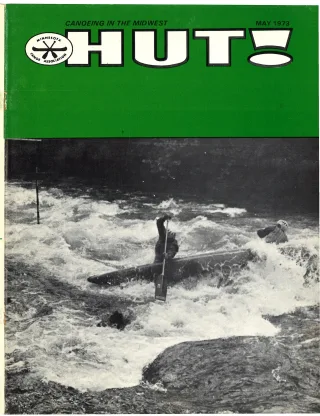
Magazine · 24 pages
May 1973 Magazine
Automatically captured text may contain recognition errors. Compare it with the original scan.
ity ‘at St. Croix Falls. This action inun-
dated a section of the valley éxtending
many miles. upstream and obliterated the
once magnificent Falls of the St, Croix
which existed at and above the dam site.
The lower valley today has largely suc-
cumbed to the advances of “civilization”
and the numerous communitiesestablished
there during the logging era continue to
expand. The pressure from a rapidly grow-
ing urban population is felt most acutely
on that section of the river, and the
throngs that descend upon William O’Brien
State Park at Marine, on a hot summer
weekend, rival the infamous crowds of
New York’s Coney Island.
The upper valley has, to date, been
spared such a large-scale invasion due pri-
marily to a lack of developed recreation
sites and to limited access. The river it-
self has acted to discourage use of its
waters by the legions of power-boaters
that. infest the lower valley since its shift-
ing sand bars and relatively low water of
mid and late summer render high speed
travel extremely hazardous.
In 1968, Congress established the Na-
tional Wild and Scenic Rivers System to
protect certain of the nation’s rivers
which possess “outstandingly remarkable
scenic, recreation, geologic, fish and wild-
life, historic, cultural or other similar
values” in order to preserve these values
“for the benefit and enjoyment of present
‘and future generations”. The St. Croix
above Taylors Falls to the dam at Gordon,
and the Namekagon below Lake Nameka-
gon was selected as one of eight rivers
initially to be included in the National
System, and the lower river, from Taylors
Falls to Prescott, has recently been added.
The St. Croix National Scenic Riverway
is to be administered by the National Park
» ya Service in cooperation with the states of
oa té tt ey he, Minnesota and Wisconsin. The Park Service
soos _ is presently in the process of acquiring
lands along the upper river as authorized
in the 1968 Act, and the preparation of a
Master Plan for the lower river isunderway.
The Wild and Scenic Rivers Act was a
The lower valley has an interesting million board feet. The yield tapered off major step forward in the effort to pre-
history, as Stillwater and her neighboring in following years and when the last logs Serve what little remains of our priceless
communities were at one time the center passed through the boom at Stillwater in natural heritage. It will not, however, en-
of activity in Minnesota. The vast quan- June of 1914, the logging era had come sure perpetual protection from the ever
tities of logs driven downstream in the to a close. The valley has never since seen ¢Xpanding needs of a consumption orient-
spring literally choked the river, andfeuds the feverish activity that took place here ¢d society. As recently as March, 1972,
between the lumbermen and the traders during the height of the logging days. the Corps of Engineers has proposed the
who operated steamboats on the river Hopefully it never will. St. Croix-Brule riverway as a “most prom-
were continual. _ ising” route for a canal linking Lake Su-
In 1848, a government land office The lumbermen are gone but the evi- perior with the Mississippi River. Such a
opened at Taylors Falls and most of the dence of their activities is not. The numer- proposal is, of course, preposterous in
land sold for lumbering during the ensu- US log piles and deadheads that line the light of the purpose and requirements of
ing years was sold through this office. Sloughs and back channels of the river the 1968 Act, but it does make quite
Much of the land obtained by the lumber give mute testimony to the massive drives clear the fact that efforts to preserve such
interests was purchased using military that once passed. The forests themselves priceless “jewels” as the St. Croix must
land warrants obtained from veterans. re living evidence of change asthe second __ be unrelenting.
With these warrants vast tracts, of land growth bircli, maple, oak, aspen and bass- The river still flows clean and free
- were bought, many for as little as 10 cents wood replace the majestic white pine through its quiet valley. Only the deter-
per acre. which once carpeted the valley. mined efforts of those who know and love
The timber boom in the Valley peaked In 1909, the Northern States Power Co. it, however, can ensure that it will contin-
in 1899 with an annual production of 373 erected a dam and power generation facil- ue to do so.
HUT! MAY, 1973 5
Generated issue overview: May 1973 issue of HUT!, published by the Minnesota Canoe Association. The issue contains articles on canoe safety, rivers and river history, canoe building, wildlife, and racing, along with association information, advertisements, and a membership form.
Generated summaries are descriptions, not original captured text. Page-range text shows complete scan pages and may include neighboring material.
AI-supplied descriptive title
Generated summary: A short verse passage describes the Potomac flowing calmly in the evening light.
Open scan page 2Title transcribed from original publication
Generated summary: Larry Johns argues that canoeists and trout fishermen can share streams if paddlers give anglers room, avoid unnecessary disturbance, keep sites clean, and respect private property.
Open scan page 3Title transcribed from original publication
Generated summary: The first part of a two-part history traces the St. Croix Valley's geological formation, Indigenous history, exploration, fur trade, settlement, logging, and protection as a wild and scenic river.
Open scan page 4Title transcribed from original publication
Generated summary: An overview of canoe safety emphasizes instruction, suitable equipment, sound judgment, cold-water precautions, safe responses to capsizes, and paddling in a group.
Open scan page 8Title transcribed from original publication
Generated summary: E. C. McGee describes quiet canoe outings on ponds as a way to observe and identify birds, plants, and other wildlife, and recommends simple field guides and collecting equipment.
Open scan page 9Title transcribed from original publication
Generated summary: A paddling guide to Wisconsin's Brule River describes its setting and geology, access points, day-trip sections, rapids, portages, campsites, and route difficulty.
Open scan page 10Title transcribed from original publication
Generated summary: In a first-person expedition account, physician and kayaker Walt Blackadar recounts his solo attempt to run Alaska's Alsek River, including the dangers of Turn Back Canyon, icebergs, capsizes, repairs, and his eventual exit.
Open scan page 13Title transcribed from original publication
Generated summary: A practical guide to designing and building a fiberglass whitewater canoe covers boat layout, materials, flotation, bracing, seats, construction conditions, lay-up, and finishing.
Open scan page 16AI-supplied descriptive title
Generated summary: During an autumn float on the Namekagon, the narrator observes wildlife and reflects on deer poaching, coyotes, and the human impact on the natural world.
Open scan page 19Title transcribed from original publication
Generated summary: Hansi Marte recounts being a novice at canoe racing during a Madison slalom weekend, describing practice, races, mistakes, advice from other paddlers, and the group's results and camaraderie.
Open scan page 20Title transcribed from original publication
Generated summary: Al Button reports on a cold-weather St. Francis River race weekend, describing the trip, whitewater race, slalom, and paddlers' experience.
Open scan page 21Title transcribed from original publication
Generated summary: Al Button describes the Petersburg, West Virginia, race, including course conditions, competitors, the wildwater event, and his own race experience and result.
Open scan page 21