
AI-supplied descriptive title: Untitled poem about the Potomac River
AI-supplied descriptive title
Generated summary: A short verse passage describes the Potomac flowing calmly in the evening light.
Open scan page 2May 1973 · Volume/issue not printed or unknown
Magazine · 24 pages
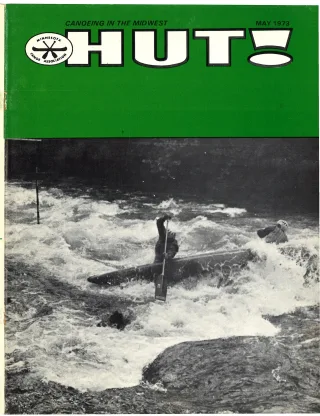
May 1973 Magazine
Automatically captured text may contain recognition errors. Compare it with the original scan.
dousioux” and which eventually became _ Mississippi to England. The British wasted his Braves to victory over the Fox and
simply “Sioux”. little time in laying claim to their newly Sioux at St. Croix Falls, at what proved
The displacement of the Dakota, or won lands. In 1767, Jonathan Carver, the to be the last major Indian battle in the
Sioux, however, did not end the fighting, first Englishman to visit the Valley, ca- Valley.
for raiding parties continued to make noed down the Namekagon to the St. It took Schoolcraft from the 26th of
regular forays into “enemy” claimed ter- Croix, up the St. Croix to its source and July to August 2nd to ascend from the
ritory well into the 1800’s. down the Brule to Lake Superior. Mississippi to the Brule portage. He com-
In 1784, a trading post was established plained of low water and of seemingly
on the Namekagon near present day Hay- endless rapids extending from Taylors
ward by Michael Cadotte, an independent Falls to Upper St. Croix Lake. Present day
trader. travelers find similar conditions at that
During the previous years of French season in the Kettle rapids and in the
domination, the British fur trade had been _tiver above the Namekagon Forks.
forced to operate via the less desirable Tom Connor’s post on the Snake was
Hudson’s Bay route. With the Frenchgone, teported still in operation at that time
the British were free to use the more effi- with a staff of 10 whites, and Schoolcraft
cient St. Lawrence route, and the North- noted the Indiar population of the Snake
west and XY Companies came into being. _ River area to be 350.
These companies, inheriting the routes and On reaching Yellow River, the site of
districts established by the earlier French an Indian settlement and trading post
traders, competed with each other and whose population he estimated at 382,
with the older Hudson’s Bay Company Schoolcraft remarked that the place would
which continued to operate through the be ideal for the establishment of a mis-
established Bay route. sion and school. In 1833 a mission was,
In 1804, Thomas Connor established in fact, established at Yellow Lake but
a Northwest Company trading post at the spot proved to be less than ideal and
Pokegama Lake on the Snake River. The the mission was soon relocated to Lake
XY Company countered with a post on Pokegama on the Snake River as a result
the nearby Kettle River which presumably of crop failures at the former site.
was abandoned when the rival companies Schoolcraft encountered one additional
merged later in that year. The site of Con- Indian settlement located near a fish trap
nor’s post was recently unearthed, has on the river some distance above the
been restored, and is now open asa State Namekagon. He reported the population
historic monument. of this village to be 88, and estimated the
In 1812, the British were forced to re- population of the entire valley to be about
linquish control of U.S. territories south 900.
of Lake Superior. Connor and other estab- The Indian’s days in the valley were
The Indian conflict wasasource of con- lished traders in the valley soon found numbered, however, for a treaty signed at
cern to the French traders who hadentered themselves working for John Jacob Astor Fort Snelling in 1837 gave all the lands
the Valley in the late 1600’s in pursuit of and the American Fur Co. extending east of the Mississippi to the
the beaver, whose pelt was worth a fortune It was not long, however, before the headwaters of the St. Croix to the United
on the European market. The demand for beaver population was depleted. By the States. The Indian would be allowed to
furs had pushed the French search for mid-1830’s, the fur trade era in the Valley remain in the region only on specified
beaver south from Lake Superior much the had come to a close. Reservations. : ;
same as the Chippewa search for food had The infant United States, occupied by In the following year White settlement
brought them to the Valley a century feverish expansion elsewhere, was slow to began in the lower valley. The first settlers
earlier. take an interest in its remote Northwest. Were farmers who worked long hours to
Indians engaged in waging war had little In 1800 the region had become part of “lear tracts out of the wooded hills above
time for trapping beaver, so it was essential the Indiana Territory and in 1809 wasin- the river. It was not long, however, before
to the trade that peace be maintained. In cluded in the Illinois territory. It was not the lumberer, whose search for new sourc-
1680, Daniel Greysolon, the Sieur de Luht, until 1832, however, while the area was ¢S Of timber to supply a growing America,
visited the area in an attempt to make part of the Michigan territory, that the ‘iscovered ie tich pine forests of the
peace among the Indians. His efforts hav- first major American expedition ventured UPP& Rae n 1839, the first sawmill
ing met with some success, he descended _ into the Valley. was se ee a aoe and for the
the entire length of the St. Croix, and re- In that year Henry Rowe Schoolcraft, re : Se ah the hills ag the ae
turned to Lake Superior via the Wisconsin Indian agent for the Minnesota-Superior on _ ith hive of h the spring, 108
and Fox Rivers and Lake Michigan. He region since 1822, led an expedition into ee Nee ee ee
was the first White Man to have made that the region to promote peace among the While the upper St. Croix and her trib-
trip. Indians and to discover the source of the utaries were the scene of the actual tim-
During the 90 year period of French Mississippi River. Returning from that ber harvest, settlement was confined large-
domination of the region, at least one successful venture in July, 1832, School- ly to the lower valley. This was due pri-
trading post was known to have been es- craft ascended the St. Croix to its source marily to the fact that the Valley depend-
tablished along the St. Croix. This post and then descended the Brule to Lake ed almost entirely on water transporta-
was located at the mouth of the Yellow Superior. The diaries kept by Schoolcraft tion for communication with the outside,
River near present day Danbury, Wiscon- and by three other members ofhisentour- and the river above the Dalles at St. Croix
sin. Another post, built on Prairie Island age provide a good picture of life in the Falls was unnavigable due to the numer-
near the mouth of the St. Croix, was op- Valley at that time. ous rapids that existed there. Although
erated by Pierre Charles le Seuer from It seems only fitting that Schoolcraft some settlement did occur in the upper
1693-1695. should have led this expedition, for in valley in areas cleared by the loggers, the
In 1763, the French lost Canada and 1821 he married the granddaughter of sandy soil would not support agriculture
portions of the U.S. territories east of the | Waub Ojeeg, Chippewa Chief who had:led and these sites were eventually abandoned.
4 HUT! MAY, 1973
Generated issue overview: May 1973 issue of HUT!, published by the Minnesota Canoe Association. The issue contains articles on canoe safety, rivers and river history, canoe building, wildlife, and racing, along with association information, advertisements, and a membership form.
Generated summaries are descriptions, not original captured text. Page-range text shows complete scan pages and may include neighboring material.
AI-supplied descriptive title
Generated summary: A short verse passage describes the Potomac flowing calmly in the evening light.
Open scan page 2Title transcribed from original publication
Generated summary: Larry Johns argues that canoeists and trout fishermen can share streams if paddlers give anglers room, avoid unnecessary disturbance, keep sites clean, and respect private property.
Open scan page 3Title transcribed from original publication
Generated summary: The first part of a two-part history traces the St. Croix Valley's geological formation, Indigenous history, exploration, fur trade, settlement, logging, and protection as a wild and scenic river.
Open scan page 4Title transcribed from original publication
Generated summary: An overview of canoe safety emphasizes instruction, suitable equipment, sound judgment, cold-water precautions, safe responses to capsizes, and paddling in a group.
Open scan page 8Title transcribed from original publication
Generated summary: E. C. McGee describes quiet canoe outings on ponds as a way to observe and identify birds, plants, and other wildlife, and recommends simple field guides and collecting equipment.
Open scan page 9Title transcribed from original publication
Generated summary: A paddling guide to Wisconsin's Brule River describes its setting and geology, access points, day-trip sections, rapids, portages, campsites, and route difficulty.
Open scan page 10Title transcribed from original publication
Generated summary: In a first-person expedition account, physician and kayaker Walt Blackadar recounts his solo attempt to run Alaska's Alsek River, including the dangers of Turn Back Canyon, icebergs, capsizes, repairs, and his eventual exit.
Open scan page 13Title transcribed from original publication
Generated summary: A practical guide to designing and building a fiberglass whitewater canoe covers boat layout, materials, flotation, bracing, seats, construction conditions, lay-up, and finishing.
Open scan page 16AI-supplied descriptive title
Generated summary: During an autumn float on the Namekagon, the narrator observes wildlife and reflects on deer poaching, coyotes, and the human impact on the natural world.
Open scan page 19Title transcribed from original publication
Generated summary: Hansi Marte recounts being a novice at canoe racing during a Madison slalom weekend, describing practice, races, mistakes, advice from other paddlers, and the group's results and camaraderie.
Open scan page 20Title transcribed from original publication
Generated summary: Al Button reports on a cold-weather St. Francis River race weekend, describing the trip, whitewater race, slalom, and paddlers' experience.
Open scan page 21Title transcribed from original publication
Generated summary: Al Button describes the Petersburg, West Virginia, race, including course conditions, competitors, the wildwater event, and his own race experience and result.
Open scan page 21