Articles (10) · Summaries (10)
Generated issue overview: January 1973 issue of HUT!, the Minnesota Canoe Association magazine. It includes canoeing and river-trip articles, canoe-building guidance, a Minnesota geology feature, cross-country ski racing coverage, and the association’s position on the Boundary Waters Canoe Area. The issue also describes a new monthly MCA Newsletter and HUT!’s move to an every-other-month schedule.
Generated summaries are descriptions, not original captured text. Page-range text shows complete scan pages and may include neighboring material.
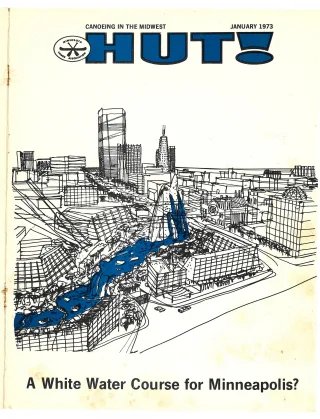
A Canoe Course For Minneapolis
Title transcribed from original publication
Generated summary: Proposes a whitewater canoe course in downtown Minneapolis, linking a suggested fountain project and riverfront redevelopment with opportunities for canoeists to design a course on the Saint Anthony Falls gradient.
Open scan page 4
Read captured page 4 →
Canoeing The Vermilion River
Title transcribed from original publication
Generated summary: Describes the Vermilion River route from Lake Vermilion to Crane Lake, including its rapids and falls, hazards, portages, campsites, access points, and historical and natural features.
Open scan page 6
Read captured pages 6–8 →
A Caution On MCA Resin
Title transcribed from original publication
Generated summary: Explains potential effects of exposure to canoe-building resin and styrene, and offers precautions for ventilation, skin and eye contact, clothing, and safe handling.
Open scan page 9
Read captured page 9 →
AWA Establishes Manmade Slalom Course Committee
Title transcribed from original publication
Generated summary: Reports the American Whitewater Affiliation’s appointment of A. R. McLain to chair a committee evaluating possible manmade slalom-course sites and working with local groups on course development.
Open scan page 9
Read captured page 9 →
The Story of Our Minnesota Earth
Title transcribed from original publication
Generated summary: Explains how glaciers and streams shaped Minnesota’s landscape, discussing lakes, moraines, eskers, Lake Agassiz, waterfalls, potholes, and ancient rocks, with examples from state parks.
Open scan page 10
Read captured pages 10–12 →
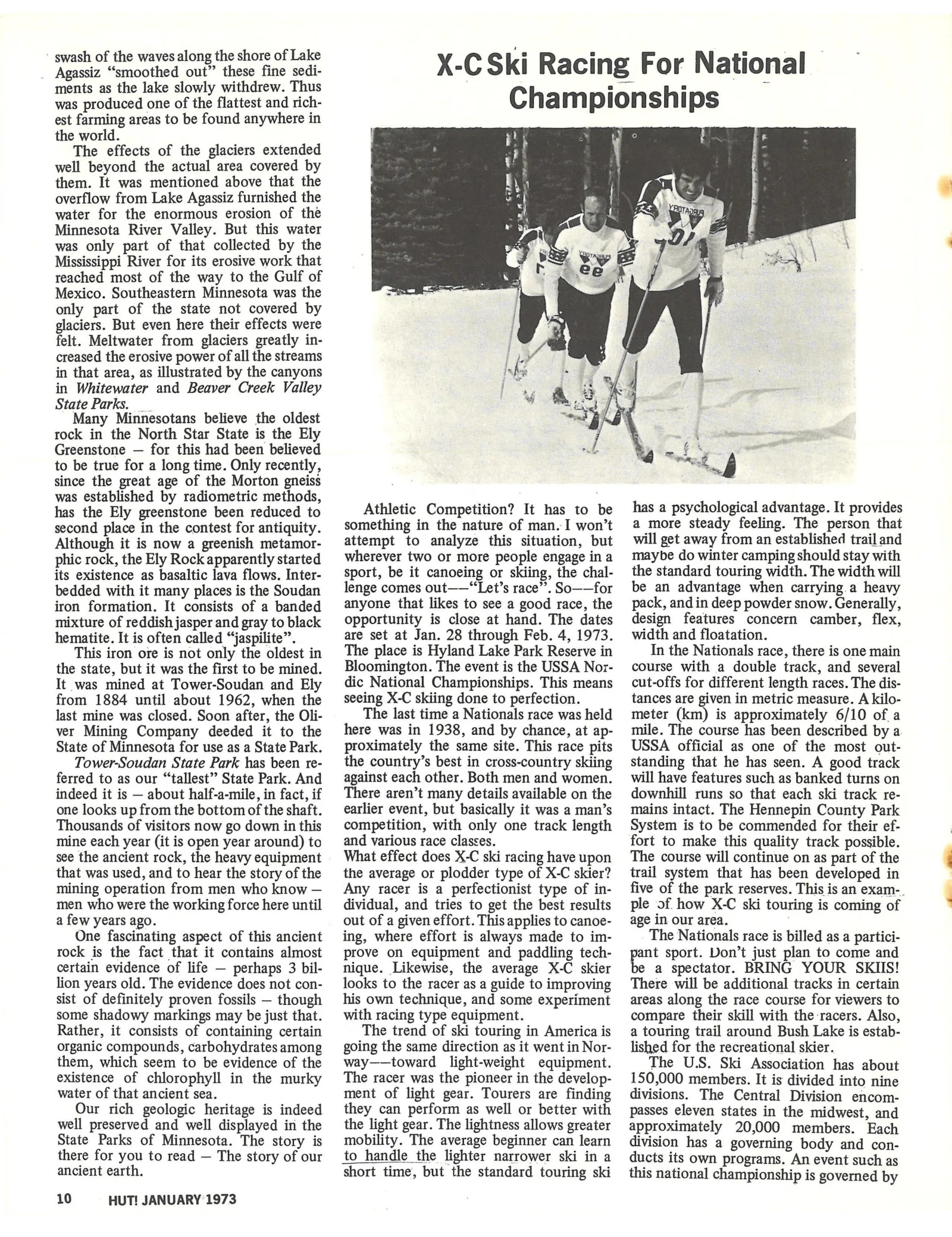
X-C Ski Racing For National Championships
Title transcribed from original publication
Generated summary: Previews the U.S. Ski Association Nordic National Championships at Hyland Lake Park Reserve in Bloomington, covering the event, course, racing and touring equipment, and ways spectators and recreational skiers can participate.
Open scan page 12
Read captured pages 12–13 →
Builders’ Contest
Title transcribed from original publication
Generated summary: A photo feature on the 1972 canoe builders’ contest, showing and captioning winning canoes and construction details. The printed credit identifies Ketter for the photographs.
Open scan page 14
Read captured pages 14–15 →
Kayaking the Grand Canyon
Title transcribed from original publication
Generated summary: Recounts a supported kayak trip down the Colorado River through the Grand Canyon, describing rapids, kayaking techniques and hazards, equipment, safety constraints, and the experience of the trip.
Open scan page 16
Read captured pages 16–17 →
Canoe Building and Weight Considerations
Title transcribed from original publication
Generated summary: Offers construction suggestions for reducing the weight of wood-strip canoes, including wood selection, strip thickness, fiberglass use, hull reinforcement, and lighter components.
Open scan page 17
Read captured page 17 →
MCA States Views on BWCA
Title transcribed from original publication
Generated summary: Presents the Minnesota Canoe Association’s recommendations for managing the Boundary Waters Canoe Area and Superior National Forest, addressing wilderness protection, logging, vegetation, minerals, water control, motorized use, and visitor access.
Open scan page 18
Read captured page 18 →