
FROM THE BOW
Title transcribed from original publication
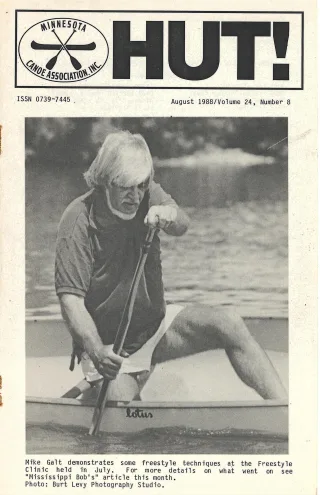
Generated summary: The MCA president discusses summer paddling, a freestyle clinic, member involvement, and the association’s financial stability.
Open scan page 4August 1988 · Vol. 24 No. 8
Magazine · 48 pages
August 1988 Magazine (Vol. 24 No. 8)
Automatically captured text may contain recognition errors. Compare it with the original scan.
mun ELASAWATER URULSE RATING SYSTEM
Cruise Distance Stroke Rate/ May contain special difficulty
Class (miles) mph over current speed (limitations & inclusions)
A 0-10 minimum paddling/ always on river
at current speed always downstream
B 5-20 slow to easy downstream or lake
only very mild rapids
no sweepers
C 10-25 moderate speed/ only smal} amounts of upstream
3-4 mph above cs mild rapids/sweepers
D 10-50 fast cruise/ all of the above/some upstream
4-5.5 mph above cs maneuvering required
E any racer pace/ all of the above/
distance! 5 mph+ above cs increased upstream
& over
50 miles
INTERNATIONAL SCALE OF RIVER DIFFICULTY
(USE FOR RATING MCA WHITEWATER CRUISES)
Class I-VERY EASY
1. Waves small and regular
2. Passages clear
3. Sandbanks, artificial difficulties like bridge piers
4. Riffles
Class II-EASY
1. Rapids of medium difficulty
2. Passages clear and wide
3. Low ledges
Class III-MEDIUM
1. Waves Numerous, high and irregular
2. Rocks and eddies
3. Rapids and passages that are clear though narrow, requiring expertise
in maneuvering.
4. MAY REQUIRE SCOUTING FROM SHORE
Class IV-DIFFICULT
1. Long rapids
2. Waves powerful, irregular
3. Dangerous rocks
4. Boiling eddies
5. Passages difficult to scout
6. Reconnoitering mandatory the first time
7. Powerful and precise maneuvering required
Class V-VERY DIFFICULT
‘ 1. Extremely long difficult, and very violent rapids following each
other almost without interruption
2. River bed extremely obstructed
3. Big drops, violent current, very steep gradient
4. Scouting essential, but difficult
Class VI-EXTRAORDINARILY DIFFICULT
1. Difficulties of Grade V carried to extremes of navigability
2. Almost impossible and very dangerous
3. For EXPERTS only, at favorable water levels and after close study
with all precautions taken
4. ALMOST ANY CLASS V BECOMES CLASS VI AT HIGH WATER LEVELS
24 HUT!-August 1988
Generated issue overview: August 1988 issue of HUT!, the monthly Minnesota Canoe Association publication. The issue includes canoeing reports and commentary, trip accounts, organizational material, event information, race results, advertisements, and member services.
Generated summaries are descriptions, not original captured text. Page-range text shows complete scan pages and may include neighboring material.
Title transcribed from original publication
Generated summary: The MCA president discusses summer paddling, a freestyle clinic, member involvement, and the association’s financial stability.
Open scan page 4Title transcribed from original publication
Generated summary: The report recounts MCA members’ participation in dragon boat festivals in Taipei and Hong Kong, describing the race formats and the U.S. women's team’s fourth-place finish in Hong Kong.
Open scan page 4Title transcribed from original publication
Generated summary: A brief account of the annual canoe day describes attendance, visiting officials, the St. Croix cruise, and windy conditions near the takeout.
Open scan page 5Title transcribed from original publication
Generated summary: A local canoeing column covers river cleanup, urban paddling and races, Mike Galt’s clinic, freestyle practice, and the author's views on qualifying cruises and paddling standards.
Open scan page 6Title transcribed from original publication
Generated summary: The author describes a family outing on Gun Club Lake, including access and portage conditions, fishing, wildlife, wind, and the practical challenges of canoeing with young children.
Open scan page 8Title transcribed from original publication
Generated summary: The letter urges readers to consider other members’ perspectives, value different forms of canoeing, and respect differing opinions within the MCA.
Open scan page 9Title transcribed from original publication
Generated summary: A product-review column praises the Grey Owl C-1 whitewater paddle, describing its weight, construction, balance, and suitability for whitewater and touring.
Open scan page 10Title transcribed from original publication
Generated summary: The author responds critically to claims that a particular solo canoe is perfect or faster than other models, comparing the Traveler III and other canoes with the Merlin and Traveler I.
Open scan page 11Title transcribed from original publication
Generated summary: The author recounts an MCA group trip on Great Slave Lake, visiting sites associated with explorers George Back and John Hornby and describing the Hoarfrost, Lockhart, and Pike's Portage areas.
Open scan page 12Title transcribed from original publication
Generated summary: The editor argues that the MCA benefits from supporting varied interests in canoe sport, including recreational canoeing, canoe camping, northern trips, building, racing, and whitewater.
Open scan page 14Title transcribed from original publication
Generated summary: The membership director explains that a questionnaire included with renewal notices is optional and is intended to help the MCA understand members’ interests and willingness to volunteer.
Open scan page 14Title transcribed from original publication
Generated summary: The review recommends Rivers Running Free: Stories of Adventurous Women, praising its selected writings and its presentation of women's long-standing participation in canoeing and outdoor adventure.
Open scan page 21Title transcribed from original publication
Generated summary: The author reflects on decades of canoeing in Grumman aluminum canoes, recounting their durability, repairs, limitations, and service on rivers and lakes while defending their place in canoeing.
Open scan page 30Title transcribed from original publication
Generated summary: A first-person journal recounts a 24-day, roughly 580-mile canoe journey from Damant Lake through the Elk and Thelon rivers and lakes to Baker Lake. It describes rapids, portages, weather, wildlife, ice delays, equipment, and the trip's conclusion.
Open scan page 34