← Back to The HUT

March 1988 · Vol. 24 No. 3

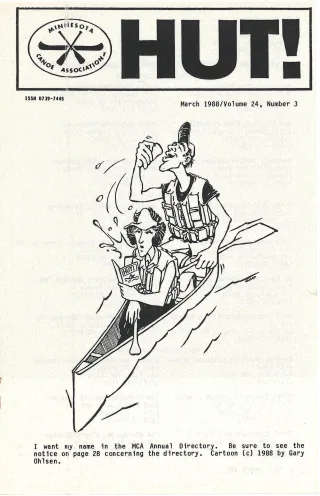
March 1988 Magazine (Vol. 24 No. 3)

Issue first-page cover

Magazine · 40 pages

March 1988 Magazine (Vol. 24 No. 3)

Captured text — scan page 7

Automatically captured text may contain recognition errors. Compare it with the original scan.

them. We have discussed this problem over the last few years, and we
know that some type of classification of cruises is necessary. We
need something that both the trip leaders and the participants can
understand.

I'm open for suggestions as to ways to improve my five-step
system. Suggest a better way and I promise we will listen.

Ok, here we go--Classes A-E. A Class A cruise requires no
paddling. It is a float trip. The canoes can travel thwarted up and
Jet the wind and current determine the speed. These trips should be
short; five to ten miles in length. Ten would be maximum and then
only if there is a good current running.

Absolutely no rapids should be included in a class A cruise.
Plenty of time should be allowed for swim call and cold beer.

A Class E is easy to cover. It is a real “gut buster" like
Betty's annual endurance canoe trip (St. Cloud to Minneapolis in 12
hours).

Any cruise covering more than fifty miles in a day or one
requiring extended periods of upstream work ought to be rated as a
Class E.

The B, C, and D Class cruises are somewhat more iffy, a little
harder to define.

A Class B does require some easy paddling, it should be all
downstream or lake work. The daily limit should be about fifteen
miles downstream. Most MCA members would prefer the Class B cruise,
as it will match their paddling output.

Very mild rapids can be tolerated on a Class B as Jong as no
equipment is likely to get broken up. The people should be made
aware that rapids do exist on the route. Such a cruise would be
classed as a Class BW.

A Class C begins to weed out the folks who really came out to
paddle, some upstream work may be required and the distances are
getting longer and the pace faster. A Class C cruise participant
should plan on 4 MPH and cover 20-25 miles in a day cruise. Try
paddling 4 miles in an hour on your local Jake before you sign up for
a Class C.

A Class D is a hard-push; it should be 35-50 miles downstream
distance at 4.5-5 MPH average speed. Upstream and back cruises are
quite acceptable as this gives more paddling time during a day.

These are guidelines, put
in your ideas, and we may
re-define this classification
system. We would like to see
nf Cruise Classes so well High Strength
defined that every leader Light Weight Paddle
calls it right and every Barton carbon fiber canoe pad-
participant ends up on the dles combine light weight and

right cruise. se .
When this Cruise Class- durability. Swift, clean entry

ification comes into general and exit from water means less
use, we would like to urge our fatigue. Several styles available.
members to start out at a Free brochure.

Class A or Class B_tlevel BARTON
before they come on a Class C er” PADDLE
cruise. Do a few Class C's co.

before you sign up for a Class 6201 23-1/2 Mile Rd. © Homer, MI 49245
D. Save the Class E's for the (517) 568-3799

5 P.M. to 9 P.M. (517) 568-4697
heroes or come as a spectator

or bank runner.--Bob- Brown,
Cruise Committee

March 1988-HUT! 7

Articles (14) · Summaries (14)

Generated issue overview: March 1988 issue of HUT!, the monthly publication of the Minnesota Canoe Association. The issue includes association news, canoeing and safety articles, chapter updates, trip information, financial and board reports, advertisements, calendars, and membership materials.

Generated summaries are descriptions, not original captured text. Page-range text shows complete scan pages and may include neighboring material.

From the Bow

Title transcribed from original publication

Generated summary: The MCA president thanks association volunteers and reports on the boat show, Builders Show, dragon boat fundraising, and plans for cruise guidelines and paddling trips.

Open scan page 4

Read captured pages 4–5 →

First International Dragon Boat Races in the Western Hemisphere: Chicago International Dragon Boat Races June 18, 1988

Title transcribed from original publication

Generated summary: An announcement describes the Chicago dragon boat festival and race schedule, team practice opportunities, possible international competition, and how to contact the American Dragon Boat Association.

Open scan page 5

Read captured page 5 →

Letters to HUT!—A Request for Help

Title transcribed from original publication

Generated summary: A letter from the coordinator of Courage Center's canoeing program asks readers for help finding a canoe trailer for the summer program serving people with physical disabilities.

Open scan page 5

Read captured page 5 →

River Ramblin's

Title transcribed from original publication

Generated summary: The author promotes Superior National Forest volunteer opportunities and urges readers to consider candidates' environmental records, particularly on acid rain and clean water.

Open scan page 6

Read captured page 6 →

Classification of Cruises

Title transcribed from original publication

Generated summary: Explains a proposed five-level cruise classification system, from easy float trips to strenuous long-distance paddles, with guidance on distance, pace, and rapids.

Open scan page 6

Read captured pages 6–7 →

Ice Breaker Two

Title transcribed from original publication

Generated summary: Provides details for an April 9 canoe cruise from Shakopee to Fort Snelling State Park on the Minnesota River, including launch arrangements, timing, distance, and an estimated class B-to-C level.

Open scan page 8

Read captured page 8 →

News Release from Superior National Forest

Title transcribed from original publication

Generated summary: Describes summer volunteer opportunities with the Superior National Forest, including trail work, campsite projects, and wilderness or recreation positions, along with eligibility and program benefits.

Open scan page 8

Read captured page 8 →

A Matter of Perspective

Title transcribed from original publication

Generated summary: Cliff Jacobson argues that canoeists' preferences about equipment and trips are matters of personal perspective, using examples involving stoves, solo canoes, clothing, and wilderness camping.

Open scan page 14

Read captured pages 14–15 →

Remember Cliff, It's All Perspective

Title transcribed from original publication

Generated summary: The editor responds to Jacobson, arguing that people should choose equipment within their means and rejecting the idea that only remote or expensive expeditions count as real canoe trips.

Open scan page 15

Read captured pages 15–16 →

Rapids Riders Chapter News

Title transcribed from original publication

Generated summary: Reports on Rapids Riders meetings, an introductory whitewater program, cruise planning, safety efforts, and plans for CPR and wilderness first-aid training.

Open scan page 26

Read captured pages 26–27 →

Duluth Traveller

Title transcribed from original publication

Generated summary: Twin Ports Chapter news covers an upcoming meeting and ski weekend, a winter trip, wilderness camping advice, and Sundquist's plans to build a solo canoe.

Open scan page 27

Read captured pages 27–28 →

CircumMinnesota

Title transcribed from original publication

Generated summary: Outlines a planned human-powered journey tracing Minnesota's border by canoe, kayak, bicycle, and foot, with environmental observations, photography, major goals, and estimated route statistics.

Open scan page 32

Read captured pages 32–33 →

Rio Grande Trip

Title transcribed from original publication

Generated summary: Describes a planned two-week trip on the Rio Grande along the southern boundary of Big Bend National Park and invites interested paddlers to contact the organizers.

Open scan page 35

Read captured page 35 →

A Quick Guide for Trip Leaders

Title transcribed from original publication

Generated summary: Offers practical advice for leading MCA canoe cruises, including choosing a route and pace, advertising the trip, screening for suitable skill levels, keeping participant lists, and assigning a sweep.

Open scan page 36

Read captured pages 36–37 →