
From the Bow
Title transcribed from original publication
Generated summary: A brief humorous editorial explains that the president's monthly message was missing because of computer trouble.
Open scan page 4September 1987 · Vol. 23 No. 9
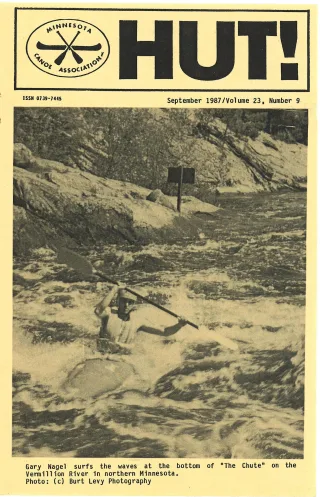
Magazine · 36 pages
September 1987 Magazine (Vol. 23 No. 9)
Automatically captured text may contain recognition errors. Compare it with the original scan.
But, over the short haul, the Coleman is definitely the better
buy. In the long run, you may prefer the SVEA. Field-testers deal
with the "now" of things, and to some extent the forseeable future.
Only backwoods crazies can usually relate to the "far-seeable"
future.
There's also the matter of ad sales, which, as everyone knows,
are the life-blood of a magazine. Some years ago, an air-mattress
manufacturer threatened me with a multi-thousand dollar law suit
because I proclaimed that the air valve on their mattress (a wimpy
plastic affair) would eventually fail. The magazine quickly changed
the word "would" to "may," and I've been gleefully substituting it in
my writing ever since. After the article appeared, the mattress
company withdrew their advertising from the magazine, and that cost
my publisher a bundle. Moral: Panning brands--even if it's true--is
always a very very bad idea. Invariably, the truth hurts!
Consider now the Coleman canoe. Yes, I know Coleman laughed all
the way to the bank with this one. We're talking big buck
advertising here. The boys in Wichita pull no punches: Those full
page ads cost several grand. In HUT!, I'11 tell you honestly that
the Coleman performs somewhat better than a Tupperware bathtub--and
is, in fact, the only canoe I've seen that paddles worse than it
looks! But, I'll never write that in a magazine which depends on ad
copy for survival. What you read in HUT! are aboveboard impressions.
There's no pressure to "stretch" the truth.
Gore-tex is another product writers don't want to mess with. My
experience suggests it works great over the short haul--and it's
wonderful in winter--but it frequently fails in the long run. Take
Gore-tex on the typical 1-4 week canoe expedition and you may be
pleasantly surprised. Do it year after year, and you might be
dolefully enlightened.
There's also the matter of "weather." Suppose I had a new tent
to test on an arctic expedition and the weather shone peaches and
cream for a full month (it happens!). I'd say the tent was
comfortable, well-ventilated and it performed to full expectations.
That would be the truth, given the biased circumstances. Yet, the
manufacturer might claim his product was a well-tested expedition
tent that had seen the whites of the enemy's eyes.
These, then are the pitfalls of magazine product evaluations. To
suggest a "scientific" comparison, editors and evaluators resort to
all sorts of unrelated statistics. Variables such as weight, tear
strength, number of stitches per inch, etc. are all tabulated and
statistically weighted to produce a “one, two, or three star"
evaluation. In the end, the results often find opposite of intent.
Case in point, the Eureka Timberline tent. It has shlocky poles
and is sewn with only six stitches per inch. Construction features
are a step above dreadful. It's fairly heavy and time-consuming to
erect--all of which tend to down-grade its performance. Yet, the
design is quite marvelous: Rig it right, guy it out, and it'll take
quite a blow. Yet, compared to more lavish tents in the survey, it
falls short. The numbers tell the story: Other tents are superior
to the Timberline, even though they leak in the rain, and the
Timberline does not. That the Timberline does its intended job
without a whimper, is overshadowed by its poor quality construction
and limited comfort features.
So be it. Consider all the facts before you go gear shopping.
And leave your magazines at home. Try the product yourself, or take
along a friend who's "been there." And do talk heartily to those who
seek truth through experience. Believe some of what you read, more
of what you hear, and draw your own conclusions, and you'll receive
good value from each and every camp dollar.--Cliff Jacobson
September 1987-HUT! 29
Generated issue overview: September 1987 issue of HUT!, the monthly publication of the Minnesota Canoe Association (Volume 23, Number 9). The issue contains canoe-trip reports, safety and canoeing features, association updates, event information, advertisements, and classified material.
Generated summaries are descriptions, not original captured text. Page-range text shows complete scan pages and may include neighboring material.
Title transcribed from original publication
Generated summary: A brief humorous editorial explains that the president's monthly message was missing because of computer trouble.
Open scan page 4Title transcribed from original publication
Generated summary: A first-person account of a relaxed two-day Namekagon River outing, describing the paddling, swimming, campsite, playful activities, and friendships made on the trip.
Open scan page 4Title transcribed from original publication
Generated summary: The author describes finding scattered garbage and heavy motorboat use during a visit to Voyageurs National Park, while also noting its wildlife and potential as a canoeing destination.
Open scan page 7Title transcribed from original publication
Generated summary: A letter updates the progress of a canoe journey across the St. Croix and Brule rivers to Lake Superior, recounting low-water travel, portages, rapids, and a wind-bound stay near Ontonagon.
Open scan page 10Title transcribed from original publication
Generated summary: Bob Brown recounts paddling a hundred-mile stretch of the Mississippi in Iowa and joining the MADRAC group paddle, describing the welcoming towns, fellow participants, and memorable stops.
Open scan page 12Title transcribed from original publication
Generated summary: An educational article explains lightning hazards and recommends safety practices for paddlers, including leaving the river, spacing out, crouching with minimal ground contact, and checking on others.
Open scan page 14Title transcribed from original publication
Generated summary: An essay describes how a powerboat's attempt to be considerate by slowing down can create a hazardous wake for canoeists, and argues for better communication and an MCA policy on the issue.
Open scan page 16Title transcribed from original publication
Generated summary: The editor reports on HUT! archive donations and bound volumes, notes that the president is not seeking reelection, and encourages members to consider serving on the MCA board.
Open scan page 17Title transcribed from original publication
Generated summary: A Twin Ports Chapter newsletter update recalls a moonlight paddle, mentions a delayed wilderness trip and an upcoming club election, and directs readers to contact a chapter leader about an Apostle Islands trip.
Open scan page 20Title transcribed from original publication
Generated summary: A report describes new Forest Service procedures that may allow some lightning-caused fires to burn under monitored conditions in the Boundary Waters Canoe Area Wilderness, while retaining strict protection for public safety and high-value areas.
Open scan page 24Title transcribed from original publication
Generated summary: The author recounts a group paddle through the St. Anthony Falls locks, a brunch at St. Anthony Main, and a return trip to the river, inviting readers to a future outing.
Open scan page 25Title transcribed from original publication
Generated summary: The second part of a canoe-building comparison discusses the application, curing, safety, and shelf life of polyester and epoxy resins, concluding that epoxy produces a better finished product while polyester can be easier and more flexible to apply.
Open scan page 26Title transcribed from original publication
Generated summary: Cliff Jacobson critiques magazine gear evaluations, arguing that short testing periods, advertising pressures, and simplified ratings can mislead readers; he urges consumers to assess equipment through personal use and experienced advice.
Open scan page 28Title transcribed from original publication
Generated summary: Sheila Huber describes an alarming first kayaking trip on the Brule River, including repeated capsizes and fear, and concludes by recommending that beginners take instruction from trained professionals.
Open scan page 30Title transcribed from original publication
Generated summary: A brief editorial note clarifies that the group in Sheila Huber's account was not affiliated with the MCA or Rapids Riders Chapter and warns about outfitters renting equipment to unqualified customers.
Open scan page 31