← Back to The HUT

April 1987 · Vol. 23 No. 4

April 1987 Magazine (Vol. 23 No. 4)

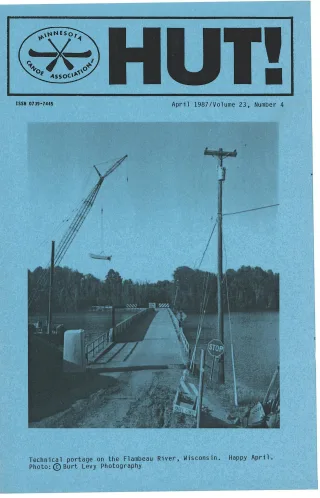
Issue first-page cover

Magazine · 40 pages

April 1987 Magazine (Vol. 23 No. 4)

Captured text — scan page 7

Automatically captured text may contain recognition errors. Compare it with the original scan.

EDUCATION & SAFETY--CLASSES FOR 1987

The following classes are planned for this year. Please read the
general section and class descriptions very carefully. If you still
have questions after re-reading the material, contact the listed
coordinator for your event. If you can't make contact with the
person coordinating the event, call me at (612) 473-4565, and I'l]
help you. See you on the river!--George Skinner

General Information on MCA Classes:

--You must be a current MCA member.

--Your boat must be currently licensed. We use state parks
and state laws will be enforced.

--All paddlers must have approprate PFD's; decked boaters
must also have helmets.

--For day classes, bring: snacks and lunch, canteen, proper
clothing for projected weather, a change of clothes (in
case you get wetter than anticipated), and sunscreen.

--Any additional special gear is detailed in the class
descriptions.

--Unless otherwise noted, you will be responsible for
providing your own boats, transportation, shuttles
(organized by instructors), camping gear, and food.

--A class registration form and release must be completed by
all participants for each class attended. Send all
registrations to listed coordinator.

--Unless otherwise noted, all registrations and class fees
must be received by mail no later than one week before the
scheduled class. No refunds after the cut off date.

--All class fees are per person.

Do not attempt to register for more than one class per registration
form, Make and fill out photocopies if you intend to take several
classes.

Class descriptions:
BEGINNING WHITEWATER - CANOE/KAYAK:

Class will follow the Red Cross format for Fundamentals and Basic
River Canoeing/Kayaking, with many additions our highly experienced
paddlers have recommended.

Students start with an orientation session followed by an in-pool
session. Students then progress to quietwater, learning essential
boat control and progress in easy stages through class I, II and III
rapids. In addition to paddling techniques, you learn river safety,
basic rescue, how to prevent hypothermia, and many other tidbits of
whitewater skill and folklore.

St. Croix Canoe Weekend party includes food and lodging.
North Country Canoe Weekend --June 6, 7-- requires separate
registration with Twin Ports Chapter.

If you are a solo paddler and want to paddle solo during the class,
please note this information on your registration form.

This class traditionally fills quickly, so sign up early.
Registration closes April 15th.

CLASSES CONTINUED ON PAGE 8
HUT! 7

Articles (10) · Summaries (10)

Generated issue overview: April 1987 issue of HUT!, the monthly publication of the Minnesota Canoe Association. The issue contains canoeing features, practical advice, chapter material, class information, calendars, advertisements, forms, and classified listings.

Generated summaries are descriptions, not original captured text. Page-range text shows complete scan pages and may include neighboring material.

From the Bow

Title transcribed from original publication

Generated summary: The MCA president discusses dry winter conditions and low-water prospects, chapter funding, upcoming canoe events, and special paddle nights with Wilderness Inquiry.

Open scan page 4

Read captured page 4 →

Cliff's Corner--Ready Recipes

Title transcribed from original publication

Generated summary: Offers practical suggestions for affordable canoe-trip meals and camp cooking, including breads, smoked meats, stews, baking, fresh foods, coffee, and trail cake.

Open scan page 10

Read captured pages 10–11 →

Cannondale Tents

Title transcribed from original publication

Generated summary: Reports that Cannondale has stopped regular tent production and describes the possibility of arranging a special-order run of Aroostook tents if enough buyers are interested.

Open scan page 11

Read captured page 11 →

I'd Rather Be Canoeing

Title transcribed from original publication

Generated summary: Recounts the MCA building show and banquet, praising the attendance, meal, and slide presentation about a canoe trip on the Winisk River and at Hudson Bay; it also thanks event sponsors.

Open scan page 12

Read captured page 12 →

Rookie Racers

Title transcribed from original publication

Generated summary: A humorous first-person account of the author's exhausting first experience with canoe racing, including instruction in paddling technique and the lessons he took away from the session.

Open scan page 14

Read captured pages 14–15 →

Plan Ahead--A Book Review

Title transcribed from original publication

Generated summary: Reviews Robert Beymer's guide to Quetico Provincial Park, describing its information on entry procedures, trip options, distances, portages, fishing, campsites, and natural features.

Open scan page 16

Read captured page 16 →

Down Stream Both Ways

Title transcribed from original publication

Generated summary: Describes a winter canoe outing on South Carolina's Ashley River, where the changing tide shapes the author's route through marshland and back to the launch point.

Open scan page 29

Read captured page 29 →

Building Tip

Title transcribed from original publication

Generated summary: Recommends wetting rows of staple holes before final sanding so the wood can swell and help close the holes and lift staple-bar dents.

Open scan page 29

Read captured page 29 →

Urban Canoeing Series

Title transcribed from original publication

Generated summary: Introduces a series of Minneapolis-area canoe outings focused on improving paddling skills, progressing from a chain-of-lakes session to river, creek, racing, and endurance outings.

Open scan page 30

Read captured pages 30–31 →

Builders Corner

Title transcribed from original publication

Generated summary: Explains how to build a cedar-strip canoe using shorter strips by cutting out knots, joining strip ends at an angle, and staggering the joints; the author notes the cost savings of using shorter lumber.

Open scan page 34

Read captured page 34 →