← Back to The HUT

November 1969 · Vol. 4 No. 1

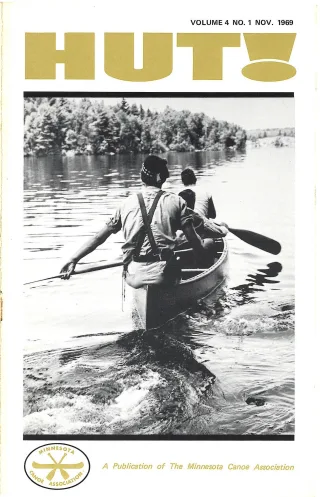
November 1969 Magazine (Vol. 4 No. 1)

Issue first-page cover

Magazine · 20 pages

November 1969 Magazine (Vol. 4 No. 1)

Captured text — scan page 7

Automatically captured text may contain recognition errors. Compare it with the original scan.

CONSERVATION

IMPORTANCE OF SAVING MINNESOTA'S CANOE COUNTRY

The unspoiled natural beauty of the Boundary Waters Canoe
Area in northeastern Minnesota is being threatened by pros-
pectors who are seeking evidence of economically exploitable
minerals, primarily nickel and copper.

The canoe area, most of which is in the Superior National
Forest, is the only middlewestern area preserved under the
1964 Wilderness Act. Combined with adjoining Quetico Pro-
vincial Park in Canada, the region is the largest such rac-
reational area in the world.

The area covers more than a million acres of interlocking
lakes, rivers and forest lands. Most of it is easily acces-
sible only by canoe. The area reported 700,000 visitor-
days last season. This pine and water land should not be
defaced by the scars of mining operations and the pollu-
tion, roads, roar of engines and commercial activity which
they would bring. No mineral is worth such exploitation.

The prospecting venture shows a defect in the 1964 Wildcr-
ness Act. The act is designed to preserve more than 1. mil-
lion acres of public land in a wild, unspoiled condition.

Conservationists sought to prohibit all new mineral opera-
tions immediately. This was opposed by Western mining in-
terests. A compromise permits new mineral leases to be
granted and new mining claims filed through Dec. 31, 198%.
After that, there is a ban on new mining.

The government has acquired only surface rights on land in
the canoe area. The prospecting is being undertaken by a
New York businessman. G. W. St. Clair, who owns mineral
rights on about 128,000 acres and has contracted with other
mineral-rights holders to explore another 192,000 acres.

The status of these mineral rights, if valuable deposits are
found, is confused. The courts generally have ruled that
the holder of mineral rights has the right to use the land
surface as necessary to extract any mineral deposits. liow-
ever, the mineral leasing act, which controls oil, gas and
certain other minerals on federal lands, provides that the
issuance of new leases is discretionary with the Sccretary
of Interior. In the past, the secretary has refused to is-
sue mineral leases on wild forest lands.

4

Articles (8) · Summaries (8)

Generated issue overview: November 1969 issue of the Minnesota Canoe Association's HUT, Volume 4, Number 1. The issue includes canoeing and boat-building features, conservation material, race coverage, club news, a recipe, correspondence, and a book review.

Generated summaries are descriptions, not original captured text. Page-range text shows complete scan pages and may include neighboring material.

Even the Best Made Plans of Mice and Men

Title transcribed from original publication

Generated summary: Westerhaus recounts planning a family whitewater trip, building C2 canoes in his basement, learning to paddle, and having a rain-soaked week on the Wolf River followed by a later successful run.

Open scan page 4

Read captured pages 4–6 →

IMPORTANCE OF SAVING MINNESOTA'S CANOE COUNTRY

Title transcribed from original publication

Generated summary: The piece argues that mineral prospecting threatens the Boundary Waters Canoe Area and describes the wilderness protections, mineral-rights issues, and possible impacts of mining.

Open scan page 7

Read captured page 7 →

GUESS WHAT, HONEY, I'M GOING TO BUILD A CANOE

Title transcribed from original publication

Generated summary: A humorous account from a spouse's perspective follows the stages of a husband's canoe-building project, from persuading her to approve it through building, launching, and learning to paddle together.

Open scan page 12

Read captured pages 12–13 →

Knights of Columbus first Missouri National Invitational Columbus Day Endurance Canoe Races--Bonne Terre, Missouri

Title transcribed from original publication

Generated summary: A report describes the rainy October 12, 1969 endurance canoe race in Bonne Terre, Missouri, praising the organizers and recounting the race format. The page also contains race-result tables, which are not treated as separate articles.

Open scan page 14

Read captured page 14 →

FIBERGLASS “TRICKS OF THE TRADE”

Title transcribed from original publication

Generated summary: Westerhaus shares practical tips for fiberglass-reinforced epoxy boat construction, including ventilation, floor protection, mold support, cutting glass strips, reinforcement, mixing resin, and spray-skirt sewing.

Open scan page 15

Read captured page 15 →

CHORP

Title transcribed from original publication

Generated summary: A short snack recipe suggests mixing equal parts chocolate pieces, raisins, and peanuts, with sugared dates as an optional addition.

Open scan page 16

Read captured page 16 →

ORACLE

Title transcribed from original publication

Generated summary: A question-and-answer section discusses the contents and storage of resin catalyst and gives historical advice for exposure or ingestion.

Open scan page 18

Read captured page 18 →

The Great River, or Down the Great River

Title transcribed from original publication

Generated summary: Ketter reviews Captain Willard Glazier's account of a canoe journey down the Mississippi, calling the book a classic and recommending it to readers who can find a copy.

Open scan page 18

Read captured page 18 →