Articles (15) · Summaries (15)
Generated issue overview: August 1969 issue of HUT, a Minnesota Canoe Association publication. The issue contains canoeing and whitewater reports, trip accounts, conservation and paddling information, club news, event notices, race results, and membership material.
Generated summaries are descriptions, not original captured text. Page-range text shows complete scan pages and may include neighboring material.
AI-supplied descriptive title: Call for volunteers and contributions to HUT
AI-supplied descriptive title
Generated summary: A club appeal describes the people and activities of the MCA and asks members to help with the newsletter, photography, advertising, bookkeeping, typing, and other organizational work. It also reports on a recent meeting.
Open scan page 4
Read captured page 4 →
BUILDING
Title transcribed from original publication
Generated summary: A short canoe-building note describes Don Lundquist obtaining telephone poles, having them milled into boards, and cutting and planing them into canoe strips at low cost.
Open scan page 5
Read captured page 5 →
Paddling in Alaska
Title transcribed from original publication
Generated summary: Georgia Longtin recounts seeing evidence of traditional kayak use in Alaska and describes materials and construction, including driftwood frames, sealskin or walrus-hide coverings, sinew stitching, and different kayak forms. She contrasts these traditions with the rarity of recreational canoeing and kayaking she observed during her trip.
Open scan page 6
Read captured pages 6–7 →
THE 1969 WHITEWATER REPORT
Title transcribed from original publication
Generated summary: The report reviews the establishment of the Kettle River Race, opportunities to identify and develop whitewater runs, MCA competitors' spring performances, and the prospect of a slalom training clinic. It describes whitewater paddling as an established and growing Midwest activity.
Open scan page 8
Read captured page 8 →
WATERMELON CRUISE
Title transcribed from original publication
Generated summary: A humorous account describes a lively watermelon grab during a canoe outing on Cedar Lake, with paddlers wrestling over the melon and swimmers joining the ensuing commotion. The item also notes that Jeff Howe was injured.
Open scan page 9
Read captured page 9 →
CANADIAN ADVENTURE: Thelon River, 1969
Title transcribed from original publication
Generated summary: A preview reports that a group of canoeists plans a three-week, approximately 400-mile journey on the Thelon River through uninhabited Arctic country, with travel beginning by air from Winnipeg and ending near Baker before onward travel to Churchill. The group hopes to observe Arctic wildlife.
Open scan page 10
Read captured page 10 →
Midnight Moonlight Cruise
Title transcribed from original publication
Generated summary: The account describes a moonlight cruise involving 31 canoes, favorable conditions at departure, and a downstream float from Anoka to the dam. After portaging, participants continued to Ketter's for pancakes, coffee, and fellowship.
Open scan page 10
Read captured page 10 →
AI-supplied descriptive title: Account of the Lockwatennial Float
AI-supplied descriptive title
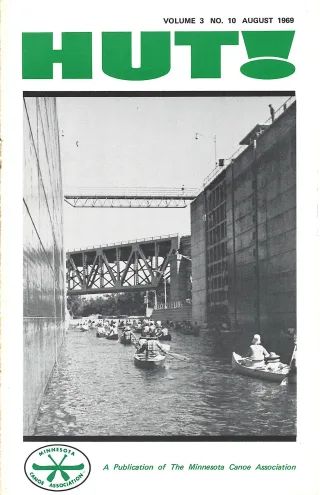
Generated summary: A report calls the Lockwatennial Float the MCA's most successful float to date and describes 54 canoes, an amphibious car, and about 150 participants making the trip despite strong winds and tornado warnings. It thanks the organizers and previous year's initiators.
Open scan page 11
Read captured page 11 →
EDITOR COMMENTS
Title transcribed from original publication
Generated summary: The editor reflects on the challenges and rewards of producing the newsletter, including obtaining a typewriter and finding volunteer typists. He praises members who contribute their time and states a goal of keeping the club's varied interests represented.
Open scan page 11
Read captured page 11 →
BWCA
Title transcribed from original publication
Generated summary: Two authors recount a Memorial Day canoe trip in the Boundary Waters Canoe Area, including camping on Basswood Lake, shared meals, difficult weather, visits to Basswood Falls, portages, and the return to Ely. They credit trip leader Bob O'Hara and the George family for help with portaging.
Open scan page 18
Read captured pages 18–19 →
RUSHTON AND HIS TIMES IN AMERICAN CANOEING
Title transcribed from original publication
Generated summary: A book review praises Atwood Manley's history of canoeing as a sport and the work of canoe designer-builder J. Henry Rushton. It highlights the book's illustrations and plans and provides ordering information and an MCA member discount.
Open scan page 20
Read captured page 20 →
PARK NATURALIST CANOE CARAVAN
Title transcribed from original publication
Generated summary: A notice describes a weekly canoe trip on the St. Croix led by a park naturalist, who interprets the river's geology, wildlife, and other features for park visitors.
Open scan page 15
Read captured page 15 →
CAMPING
Title transcribed from original publication
Generated summary: This informational item reports new canoe-route campsites in Minnesota state forests, notes that some charge a one-dollar nightly fee, and gives the address for requesting a campground brochure.
Open scan page 15
Read captured page 15 →
SHUTTLE SERVICE
Title transcribed from original publication
Generated summary: The item describes a drop-off and pick-up service for canoeists on the St. Croix, Namekagon, and Kettle rivers, including outfitter-provided transportation and equipment. It advises making reservations because the service is popular.
Open scan page 15
Read captured page 15 →
ORACLE
Title transcribed from original publication
Generated summary: A question-and-answer column addresses canoe weight and durability, redwood-board preparation, slalom racing, whitewater canoes, and cleaning brushes used with polyester resin. It closes with unanswered questions about sources for long cedar strips and straight redwood boards.
Open scan page 22
Read captured page 22 →