Articles (6) · Summaries (6)
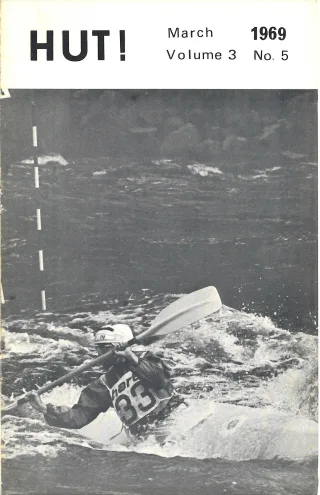
Generated issue overview: March 1969 issue of HUT!, the official publication of the Minnesota Canoe Association. It contains canoe trip writing, whitewater safety material, race and club news, a calendar, and association information.
Generated summaries are descriptions, not original captured text. Page-range text shows complete scan pages and may include neighboring material.
February Meeting
Title transcribed from original publication
Generated summary: A brief report on the February meeting in Fridley, where canoe-building enthusiasts viewed examples of wood-strip, fiberglass, and birch-bark construction. The report also notes new members and the sale of Minnesota River Trails books.
Open scan page 3
Read captured page 3 →
Rice Creek
Title transcribed from original publication
Generated summary: Describes Rice Creek's route and history, its changing water and obstacles, and suggested paddling sections. The account advises that the creek is generally canoeable in spring and early summer, with some sections requiring competent paddling.
Open scan page 4
Read captured pages 4–6 →
Oracle
Title transcribed from original publication
Generated summary: A question-and-answer column offering advice on ranking several rivers by whitewater difficulty, protecting a camera from water, and making a bail can.
Open scan page 9
Read captured page 9 →
Dashing through the snow in a one horse open-canoe?
Title transcribed from original publication
Generated summary: An account of a solo late-season canoe trip on the Namekagon in snowy conditions. The writer describes preparing for the cold, the wintry river scenery, and the effort to cover the route before dark.
Open scan page 12
Read captured pages 12–13 →
Safety in Whitewater: How to Run Rapids and Live to Tell About It
Title transcribed from original publication
Generated summary: Practical whitewater safety advice covering personal ability, flotation and clothing, scouting hazards, what to do after an upset, and the importance of traveling with an experienced leader rather than running rapids alone.
Open scan page 14
Read captured pages 14–15 →
Harsh Lesson
Title transcribed from original publication
Generated summary: The author recounts a late-fall canoe trip on Wisconsin's Brunet River during high water. In darkness, the canoe struck a barbed-wire fence across the stream; the account concludes that trip plans should allow enough time to finish safely.
Open scan page 16
Read captured pages 16–17 →