← Back to The HUT

March 1969 · Vol. 3 No. 5

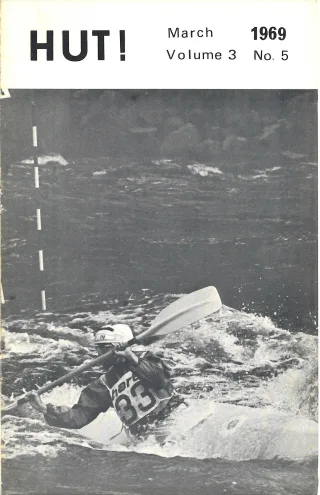
March 1969 Magazine (Vol. 3 No. 5)

Issue first-page cover

Magazine · 20 pages

March 1969 Magazine (Vol. 3 No. 5)

Captured text — scan page 13

Automatically captured text may contain recognition errors. Compare it with the original scan.

black contrast to the snow. The whole forest was

almost frighteningly still.

A lone bald eagle observed my approach as long as he
dared, then soared off to a safer tree, still in

sight but farther down the river. The snow continued
to fall, first in big soft flakes and then more slowly
in small needly crystals; finally as the weather
warmed, it turned to a misty rain, with a little hail

to relieve the silence now and then.

The canoe knifed along at a brisk pace through this
peaceful scene for two reasons. Even with rubber
gloves, the only way to keep hands warm in that
weather is to exercise them vigorously. They got
quite cold if I relaxed too much while enjoying the
scenery. Too, the daylight would last only nine
hours; with a one-hour stop for lungh that left some
forty miles to be covered in the remaining eight

hours. The distance was covered by dark -- barely.

BUILDING

USED FORMS AND STRONGBACKS WANTED

Now that you've finished your canoe, what are you
going to do with those forms and the strongback? Why
not make them available to the MCA for use by other
members? Karl Ketter has volunteered to store forms
and strongbacks and act as a clearing house. He gets
calls every week from members wanting to borrow this
kind of equipment. Call Karl at 561-2208.

3M CANOE MOLD RENTAL FEES

The 3M Canoe Club asks the following rental fees for
use of their molds:

$15.00 3M members
$25.00 MCA members
$35.00 Non-members

Call Al Buchholz 771-1551.

i BB

Articles (6) · Summaries (6)

Generated issue overview: March 1969 issue of HUT!, the official publication of the Minnesota Canoe Association. It contains canoe trip writing, whitewater safety material, race and club news, a calendar, and association information.

Generated summaries are descriptions, not original captured text. Page-range text shows complete scan pages and may include neighboring material.

February Meeting

Title transcribed from original publication

Generated summary: A brief report on the February meeting in Fridley, where canoe-building enthusiasts viewed examples of wood-strip, fiberglass, and birch-bark construction. The report also notes new members and the sale of Minnesota River Trails books.

Open scan page 3

Read captured page 3 →

Rice Creek

Title transcribed from original publication

Generated summary: Describes Rice Creek's route and history, its changing water and obstacles, and suggested paddling sections. The account advises that the creek is generally canoeable in spring and early summer, with some sections requiring competent paddling.

Open scan page 4

Read captured pages 4–6 →

Oracle

Title transcribed from original publication

Generated summary: A question-and-answer column offering advice on ranking several rivers by whitewater difficulty, protecting a camera from water, and making a bail can.

Open scan page 9

Read captured page 9 →

Dashing through the snow in a one horse open-canoe?

Title transcribed from original publication

Generated summary: An account of a solo late-season canoe trip on the Namekagon in snowy conditions. The writer describes preparing for the cold, the wintry river scenery, and the effort to cover the route before dark.

Open scan page 12

Read captured pages 12–13 →

Safety in Whitewater: How to Run Rapids and Live to Tell About It

Title transcribed from original publication

Generated summary: Practical whitewater safety advice covering personal ability, flotation and clothing, scouting hazards, what to do after an upset, and the importance of traveling with an experienced leader rather than running rapids alone.

Open scan page 14

Read captured pages 14–15 →

Harsh Lesson

Title transcribed from original publication

Generated summary: The author recounts a late-fall canoe trip on Wisconsin's Brunet River during high water. In darkness, the canoe struck a barbed-wire fence across the stream; the account concludes that trip plans should allow enough time to finish safely.

Open scan page 16

Read captured pages 16–17 →