← Back to The HUT

August 1971 · Vol. 5 No. 9

August 1971 Magazine (Vol. 5 No. 9)

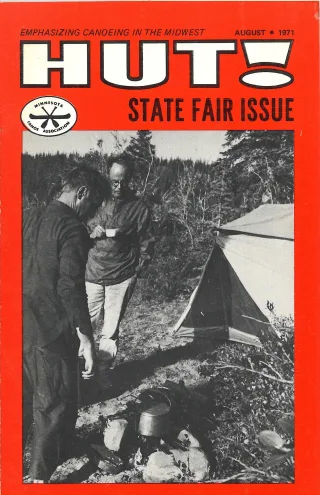
Issue first-page cover

Magazine · 20 pages

August 1971 Magazine (Vol. 5 No. 9)

Captured text — scan page 19

Automatically captured text may contain recognition errors. Compare it with the original scan.

This shows the complete scan page, including any other material on it.

Camp Cookery

BEEF JERKY*

1-1/2 Ib. flank or round steak
(or sirloin, filet mignon, venison)
I tsp. liquid smoke
1/3 tsp. garlic powder
1/3 tsp. pepper

Yield: 5-8 oz. jerky

1 tsp. onion powder

1 tsp. monosodium glutamate
1/4 c. soy sauce

1/4 c. Worcestershire sauce
Barbecue salt, if desired

(Game only should be soaked 5 min. in salt water.) Trim off every spot of fat possible.
Partly freeze meat in order to slice thin: slice 1/8 inch thick across the grain. Marinate
overnight in shallow glass dish or jar with lined cover on side, in refrigerator, turning
occasionally to coat. Drain well on paper toweling and pat dry. Lay strips in a single layer
on oven rack and place cookie sheet or foil beneath to catch drips.

Dry at 120-140° (lower temperature better) with oven door open 8-12 hr., tasting
occasionally until meat reaches chewiness desired. Turn once if feasible.

Dehydrating weakens the seasonings, which is why they must be abundant. Jerky has
high nutritional value, lacking only vitamin C and animal fats. (Adding paprika with other
seasonings will add some vitamin C.) You will lose 2/3 to 4/5 of the bulk through
dehydration. 3 oz. jerky and a canteen of water will keep a hiker going all day, but it isn’t a
complete food. (For another version and more information, see Jim Kimball’s column in the
Sunday Minneapolis Tribune, November 30, 1969.)

*from A FINE KETTLE OF FISH And Other Things: The Wilderness Chef’s Handbook,

©1970 Jean-Marie Fisher

Ropes Present Knotty
Problems for Canoeists

by Ham Kurtz

Stop and think of how many ways you use
rope, or line, with your canoe. If you actually
start to list them you'll find many uses, such as
bowline to hold your canoe to shore; sternline
to tow another canoe or drag something in the
water; to tie your canoe to your car rack; to
lash the bow and stern to the bumpers of your
car; to tie something into your canoe so you
won’t lose it if you spill; to tie your canoe
alongside another canoe. Does it do double
duty when you set up a campsite? Use it asa
clothesline. Use it as a tentrope. And heaven
knows how many more uses you may have for
it.

There are four basic factors about ropes in
relation to canoes that concern me when
buying a new line:

1. Is it strong enough to do the job? Read
the packaging or labels with the rope to check
it out. Generally, I want a rope that will take at
least 700 pounds strain: :

2. How thick is it? Often people buy strong
rope that is too thin. The problem comes when
you try to hold with your bare hands a thin

ES

rope that is carrying or taking a strain. Once
you’ve had your hands burned or cut by narrow
line you’ll know what I’m talking about. I like a
rope of at least 3/8-inch diameter. If you ever
get stuck with a thin rope and must hold it
securely I suggest wrapping it around a canoe
paddle or similar object and holding that with
your hands instead of the rope itself.

3. How does it stand up to constant expo-
sure to water? Some ropes tend to rot and
deteriorate quickly from moisture. Among the
synthetics I prefer a good tightly woven nylon
rope. In addition to outlasting most ropes it
also has a better “‘feel”’ to it than others.

4. Is it easy to tie and untie knots with it?
Some ropes tend to be very difficult to work
with and are real bears when it comes to
breaking, or untying, knots. A little experience
with various types of rope will demonstrate the
value of this quality.

A good test of a rope is to get it wet, along
with your hands, and to try pulling on it. If it’s
too thin, you’ll know immediately. Put a knot
in it, pull it tight, and then untie it. Soon you'll
know even more about that rope.

Be aware that when you need a rope the
most,- the situation is usually such that you
want the best. Therefore, when you buy a new
rope, get the best.

Articles (18) · Summaries (18)

Generated issue overview: August 1971 issue of HUT!, volume 5, number 9, published by the Minnesota Canoe Association. The issue includes canoeing features and commentary, club and event news, race reports and results, a hiking feature, a recipe, and classified material.

Generated summaries are descriptions, not original captured text. Page-range text shows complete scan pages and may include neighboring material.

Experimental Approach to September Meeting to Have Local Touch

Title transcribed from original publication

Generated summary: Explains a plan to hold the September activities meeting as informal regional gatherings and asks members to offer meeting places and canoe-related slides or films.

Open scan page 2

Read captured page 2 →

Fifth Annual St. Croix Slalom to Be Held September 25-26

Title transcribed from original publication

Generated summary: Invites competitors, officials, and spectators to the St. Croix Slalom, outlining course classes, camping, registration, and volunteer needs.

Open scan page 5

Read captured page 5 →

Half a Million Dollars Raised by Canoe Tax Bill — Why?

Title transcribed from original publication

Generated summary: Critiques Minnesota's canoe licensing bill, examining arguments offered for it, the handling of license revenue, safety regulation, theft, and federal aid.

Open scan page 6

Read captured pages 6–7 →

Editor's Stockpile

Title transcribed from original publication

Generated summary: Editorial notes seek office support and advertising help for HUT! and announce the editor's planned departure after the September issue, along with a gradual transition for the art and production editor.

Open scan page 7

Read captured page 7 →

St. Croix Whitewater Clinic: Great Practice Session

Title transcribed from original publication

Generated summary: Reports on the July St. Croix Whitewater Clinic, which became a practice session with gates, visiting paddlers, and preparations for the upcoming slalom.

Open scan page 7

Read captured page 7 →

A Dry-Season Alternative for River

Title transcribed from original publication

Generated summary: Describes hiking on Isle Royale and offers practical advice about hiking footwear, packs, socks, and related reading. The final words of the OCR title are unclear.

Open scan page 8

Read captured page 8 →

Five New Hiking-Riding Trails Approved by Legislature

Title transcribed from original publication

Generated summary: Describes five Minnesota trails authorized by the 1971 Legislature and notes that land acquisition, trail clearing, and facilities will take time before public use.

Open scan page 9

Read captured page 9 →

Summary of July Board Meeting

Title transcribed from original publication

Generated summary: Summarizes MCA board reports and decisions, including membership, complimentary issues, the annual banquet, regional meetings, and editorial staffing changes.

Open scan page 9

Read captured page 9 →

Whitewater World Championships, Merano, Italy, 1971

Title transcribed from original publication

Generated summary: Covers U.S. paddlers' performances at the 1971 world whitewater championships, recounts a team-race run, and presents slalom and wildwater results and medal information.

Open scan page 10

Read captured pages 10–11 →

MCA State Fair Display Will Be Largest We've Put On

Title transcribed from original publication

Generated summary: Invites members to contribute homemade canoes and volunteer for the MCA's State Fair display, describing the planned canoe-building exhibit and arrangements for displaying and guarding boats.

Open scan page 11

Read captured page 11 →

Low Water Slows But Does Not Stop MCA Cruisers

Title transcribed from original publication

Generated summary: Describes how late-summer low water has limited cruising and mentions possible trips and rivers that may still be suitable for canoeing.

Open scan page 11

Read captured page 11 →

Rum River Canoe Derby Results Announced

Title transcribed from original publication

Generated summary: Reports on the third annual Rum River Canoe Derby, including the 16-mile race, family races, participant totals, and results in several divisions.

Open scan page 12

Read captured page 12 →

Having Trouble With Your Partner?

Title transcribed from original publication

Generated summary: Discusses disagreements between canoeing partners, especially racing partners, and recommends patience and considerate communication, with examples of canoe etiquette.

Open scan page 13

Read captured page 13 →

Alumacraft Hosts MCA Personnel

Title transcribed from original publication

Generated summary: Recounts an MCA group's visit to Alumacraft, where staff sought input about canoe markets and design; describes the Quetico model and the canoe assembly process.

Open scan page 14

Read captured pages 14–15 →

Lockwatennial Viewed on TV News

Title transcribed from original publication

Generated summary: Reports that 32 canoes took part in the Lockwatennial and that KMSP-TV filmed the event, praising participants for keeping to schedule.

Open scan page 15

Read captured page 15 →

Charlie Motorizes His Cast Iron Canoe

Title transcribed from original publication

Generated summary: A humorous story recounts an improvised steam-powered canoe and its disastrous test run, ending with a collision and explosion.

Open scan page 16

Read captured page 16 →

Beef Jerky

Title transcribed from original publication

Generated summary: Provides a beef jerky recipe with ingredients, marinating and drying instructions, and notes on yield and nutritional value.

Open scan page 19

Read captured page 19 →

Ropes Present Knotty Problems for Canoeists

Title transcribed from original publication

Generated summary: Explains considerations for choosing canoe rope, including strength, diameter, water resistance, and ease of tying and untying knots.

Open scan page 19

Read captured page 19 →