Articles (21) · Summaries (21)
Generated issue overview: March 1971 issue of HUT!, the monthly publication of the Minnesota Canoe Association. The issue includes canoeing and camping features, canoe-racing coverage, conservation material, correspondence, and association news. The issue date is supported by repeated page footers and the publication statement; the cover date is garbled in OCR.
Generated summaries are descriptions, not original captured text. Page-range text shows complete scan pages and may include neighboring material.
The Good Things in Life Can Be Freed
Title transcribed from original publication
Generated summary: An editorial argues that preserving natural features and experiences requires funding for conservation efforts, and proposes soliciting voluntary contributions through the magazine for specific projects.
Open scan page 4
Read captured page 4 →
What’s Wrong With Higher Standards?
Title transcribed from original publication
Generated summary: The article discusses a dispute over whether Minnesota can impose stricter limits on radioactive discharges from power plants than federal standards, and cites a study of infant mortality near a nuclear plant.
Open scan page 4
Read captured page 4 →
Acknowledge Contribution to BWCA Defense
Title transcribed from original publication
Generated summary: A letter thanks the Minnesota Canoe Association for its contribution to the Boundary Waters Canoe Area legal defense fund and reports on the progress and costs of the related legal action.
Open scan page 5
Read captured page 5 →
In Defense of the Woodchuck
Title transcribed from original publication
Generated summary: The letter challenges a previous negative characterization of woodchucks, citing their role in soil processes and arguing for greater respect for ecological interdependence.
Open scan page 5
Read captured page 5 →
Finding the Right Outfit: The Cook Kit
Title transcribed from original publication
Generated summary: A practical guide to assembling a wilderness cook kit for canoe trips. It describes typical equipment and discusses choices for pots, cups, plates, bowls, frying pans, and other cooking gear.
Open scan page 6
Read captured pages 6–7 →
How One Canoeist Visits a Boat Show
Title transcribed from original publication
Generated summary: The author explains why he attends boat shows despite the limited canoe and canoe-accessory displays, focusing instead on outfitters, conservation agencies, and regional groups that provide useful information and trip-planning materials.
Open scan page 7
Read captured page 7 →
Try Your Canoe Knowledge
Title transcribed from original publication
Generated summary: A canoeing vocabulary quiz presents across and down clues covering canoe parts, paddling, water, and canoe travel; the page directs readers to answers on page 16 of the printed issue.
Open scan page 8
Read captured page 8 →
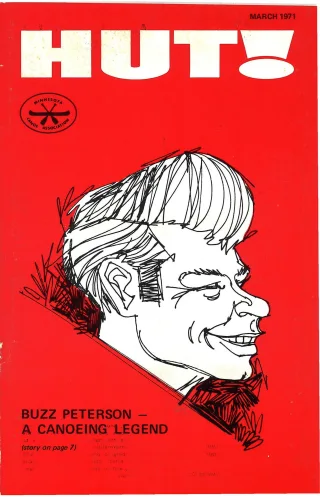
Buzz Peterson — A Canoeing Legend
Title transcribed from original publication
Generated summary: A profile of canoe racer Irvin “Buzz” Peterson recounts his long racing career, major victories, partnerships, canoe designs, racing tactics, training, and family support. It portrays him as a skilled and sportsmanlike competitor and a major figure in canoe racing.
Open scan page 9
Read captured pages 9–12 →
Rice Creek Will Flow Again
Title transcribed from original publication
Generated summary: A humorous, seasonal note anticipates the MCA’s Rice Creek cruise and describes the creek’s fast current, sharp turns, cold water, and the need for adequate canoe control. The page also includes a separate whitewater clinic notice and a cruising schedule, which are not part of this article.
Open scan page 15
Read captured page 15 →
DNR Outlines Legislative Proposals
Title transcribed from original publication
Generated summary: A report lists Minnesota Department of Natural Resources legislative proposals, including environmental education, recreation and trail development, habitat programs, water regulation, and wildlife measures.
Open scan page 16
Read captured page 16 →
Herbst Named to St. Croix River Group
Title transcribed from original publication
Generated summary: A brief report says Minnesota DNR Commissioner Robert Herbst was appointed to an interim management team working on development of the St. Croix River under the Wild and Scenic Rivers Act.
Open scan page 16
Read captured page 16 →
Snowmobilers and Resorters Outnumbered Canoeists at BWCA Hearings
Title transcribed from original publication
Generated summary: The author reports that canoeists were poorly represented at public hearings about Boundary Waters Canoe Area regulations, summarizes access and trail figures, and urges MCA members to take part in future conservation advocacy.
Open scan page 17
Read captured page 17 →
Thoughtful Reader Remembers the BWCA
Title transcribed from original publication
Generated summary: A reader praises HUT!, requests cedar-strip canoe plans, and sends money with instructions to apply any remainder to Boundary Waters Canoe Area defense.
Open scan page 17
Read captured page 17 →
The Bald Eagle
Title transcribed from original publication
Generated summary: The article describes the bald eagle’s symbolic importance and warns that pollution can accumulate in its food and harm the bird, connecting its fate to the broader condition of the environment.
Open scan page 18
Read captured page 18 →
All We Can Do Is Try to Find Out Quickly
Title transcribed from original publication
Generated summary: A reflection argues that modern convenience and industrial activity have brought pollution and conflict with the natural environment, and calls for urgently finding ways to protect it.
Open scan page 18
Read captured page 18 →
About Car-Top Canoe Racks
Title transcribed from original publication
Generated summary: A practical guide to selecting car-top carriers and making attachments for transporting canoes, kayaks, and whitewater boats, with advice on padding, spacing, and securing boats.
Open scan page 19
Read captured page 19 →
Charlie Looks for Expedition Members for the First Grand Tour by the Charlie Expeditionary and Beer-Drinking Society (CEBDS)
Title transcribed from original publication
Generated summary: A humorous story follows Charlie’s recruitment pitch for an unconventional expedition: carrying a canoe along Route 66 from Winslow to Kingman, Arizona, staying in motels, and eating at drive-ins rather than paddling a river.
Open scan page 20
Read captured pages 20–21 →
Wild Animals as Man’s “Miners’ Canaries” to Be Amplified in Wildlife Week
Title transcribed from original publication
Generated summary: A news item describes the Wildlife Week theme “Wildlife — Who Needs It?” and reports on efforts to promote wildlife habitat and public support for habitat programs.
Open scan page 21
Read captured page 21 →
Master Psyching on Opponents
Title transcribed from original publication
Generated summary: An article describes psychological tactics in canoe racing, including bluffing, appearing relaxed, using color to affect perceptions of distance, and positioning when passing another canoe.
Open scan page 22
Read captured page 22 →
The Wayward Wind
Title transcribed from original publication
Generated summary: A personal essay recalls wilderness canoe trips shared by the author and his father in the Quetico, describing difficult crossings, portages, fishing, and time spent with family. It concludes by reflecting on the value of such experiences between father and son.
Open scan page 24
Read captured pages 24–25 →
If We Can Only Keep ’em in Sight
Title transcribed from original publication
Generated summary: The authors recount entering a women’s canoe race after little racing experience, keeping sight of a favored team, recovering from a poor start, and winning after a disputed route around an island was judged correct.
Open scan page 26
Read captured page 26 →